
[kadence_element id="39760"]

Are We Different or the Same? The Changing American Family
In this episode
The “typical” American family doesn’t look like a mid-century painting anymore. Families today are more racially, ethnically and religiously diverse than ever, and include adoptive families, interracial couples, single parents and same-sex parents. Dr. Nandi, who is Indian American and married to a white woman, knows firsthand that amazing things can happen when families work through their differences. In this episode of The Dr. Nandi Show, families of all kinds and a psychologist share how we can see the beauty in our differences and find common ground.
Watch a clip from the show
Key takeaways
- Be curious about differences instead of judging them.
- Getting to know someone different from you is how you find common ground.
- You can’t force a closed mind open, but you can model openness.
- Open adoption can give a child even more people who love them.
- Differences aren’t better or worse. They’re part of who we are.
- Respectful conversations, on all sides, are how we learn from each other.
Curiosity over condemnation: Dr. Gail Parker
Psychologist and meditation teacher Dr. Gail Parker says negative headlines can pull us apart, but only if we let them. When we choose inclusion and want to connect with all kinds of people, we start to bridge our differences.
- “You cannot pry a closed mind open.” A person has to be willing to see for themselves. What you can do is live what you believe and connect with others who are open-minded.
- Be curious. Try to understand differences instead of condemning them.
- You don’t have to make someone like you. As you get to know each other, you’ll discover what you have in common.
Dr. Parker grew up when segregation was common and interracial marriage was still illegal in many states. That history is recent, which helps explain why some people stay in their own circles. But staying separated keeps us from growing. She believes we can learn a lot from younger generations.
Dr. Nandi says his mother taught him the word “empathy” as a child: putting yourself in someone else’s shoes to understand their struggles.
An open adoption: the Stack family and Cody Richart
After several years of fertility struggles, Kathy and Greg Stack decided to adopt. Cody Richart, a young mother already caring for a 3-year-old while trying to find a home and a job, chose them from three families. “I knew I needed to do what was best for him, and that was the hardest decision of my life.”
When Kathy met Cody, it struck her that this young woman was going to give her a baby. She couldn’t imagine not having Cody in her life, so they chose full contact. Today, their son Ethan has known his story all along. Cody and her family are part of family reunions and events. “I just have another family,” Ethan says, “more people to see and share experiences with.”
Dr. Parker, herself an adoptive mother, says open adoption wasn’t even possible when she adopted her son. Dr. Nandi calls the Stacks an example of what adoptive families can be, because everything centers on what’s best for the child.
Love across cultures: Trevor and Tanisha
Tanisha Rogers-Erickson spotted Trevor Erickson in the college dorms and knew she had to meet him. For Trevor, it was love at first sight. Their diverse campus made their differences a nonissue at first. The questions came later, from friends and relatives who assumed they were just a fling. Trevor’s family, proud of its Polish heritage, expected everyone home for every holiday, which meant learning to share holidays between two families. And Tanisha’s grandmother was skeptical at first, though she and Trevor became great friends.
They expect their kids may hear comments, as anyone who’s different does. “You handle it with a grain of salt.” Dr. Nandi shares that his own families had some difficulty at first, too. But when children come along, both sides adore them. You can embrace your differences or amplify them.
The next generation weighs in
A group of recent college graduates said race doesn’t play a big role in who they date. They look at the person. Dionne Harris noted that values and long-term goals matter, and upbringing can shape them. Many said growing up in diverse schools made it feel natural. Korie Wilson, who grew up in a mostly white town, said college opened her up to people from many backgrounds.
They agreed that public debates about racial equality show how divided people can be. Korie said what frustrates her most is that conversations either don’t happen or aren’t respectful, on either side.
Dr. Parker noted that not everyone gets to go to college or travel, so not everyone has had that exposure. She also cautioned against trying to be “colorblind.” Race, culture, religion and sexual orientation are part of who people are, and they matter. Dr. Nandi agrees: as a doctor, he sees that everyone looks the same on the inside, but our differences are worth embracing and learning from.
Your questions answered
How can I talk with family members who are uncomfortable with differences? Dr. Parker suggests leading by example rather than trying to force a change. Stay curious, keep the conversation respectful, and give people time. Many families, like Dr. Nandi’s, grow closer over time.
Partha’s prescription
- Get to know people who are different from you. Their gifts and talents will enrich your life.
- Acknowledge and affirm each other’s differences.
- Respect differences, and remember that different doesn’t mean better or worse.
- Be inclusive. Differences shouldn’t be hated, feared or erased.
- Love, understanding and acceptance bring peace and harmony to our lives.
Frequently asked questions
What is open adoption?
An adoption where the birth family and adoptive family know each other and stay in contact, to whatever degree they agree on.
How can I teach my kids to respect differences?
Model curiosity and kindness, expose them to people, books and experiences from many cultures, and talk openly when questions come up.
How can couples from different backgrounds handle family tension?
Stay united as a couple, set clear boundaries kindly, and share traditions from both sides. A counselor can help if tension is affecting your relationship.
Guests
- Dr. Gail Parker, psychologist and meditation teacher
- Kathy, Greg and Ethan Stack, with Cody Richart
- Trevor Erickson and Tanisha Rogers-Erickson
- Korie Wilson, Dionne Harris, Rachel Dazer and Brandon Boswell
Titles as of filming.
Resources
- Child Welfare Information Gateway, adoption resources: childwelfare.gov
- American Psychological Association, find a psychologist: locator.apa.org
Next step
Get Dr. Nandi’s weekly tips for healthier relationships and a healthier you. Join the newsletter
Related episodes
This page shares general educational information from The Dr. Nandi Show. It is not medical advice and does not replace care from your own doctor. Always talk to your doctor or a qualified health professional about your own health.
GAIL PARKER
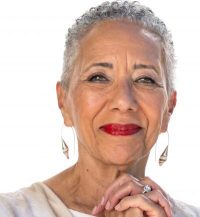
Gail Parker, Ph.D. CIAYT, E-RYT 500 is an author, psychologist, educator, and certified yoga therapist. She serves as President of the Black Yoga Teachers Alliance Board of Directors. She is the author of Restorative Yoga for Ethnic and Race-Based Stress and Trauma, and Transforming Ethnic and Race-Based Traumatic Stress With Yoga. Learn more at drgailparker.com
KATHY, GREG , ETHAN STACK ,CODY RICHART
Adoption is very different today than it was years ago when it was thought best to keep biological parents a secret. Kathy and Greg Stack adopted Ethan as an infant when his young mother Cody gave him up as she was struggling financially. While Kathy and Greg are the main parents, Cody is also a part of their family.
RACHEL, KORIE, BRANDON, DIONNE
Nowhere is the growing acceptance and practice of multiracial relationships more common than on college campuses. Many younger people are more exposed to different races and likely have grown up with a favorite musical entertainer, TV show or graphic novel highlighting different races. Rachel, Korie, Brandon and Dionne are a group of millennials who share thier take on diversity








