


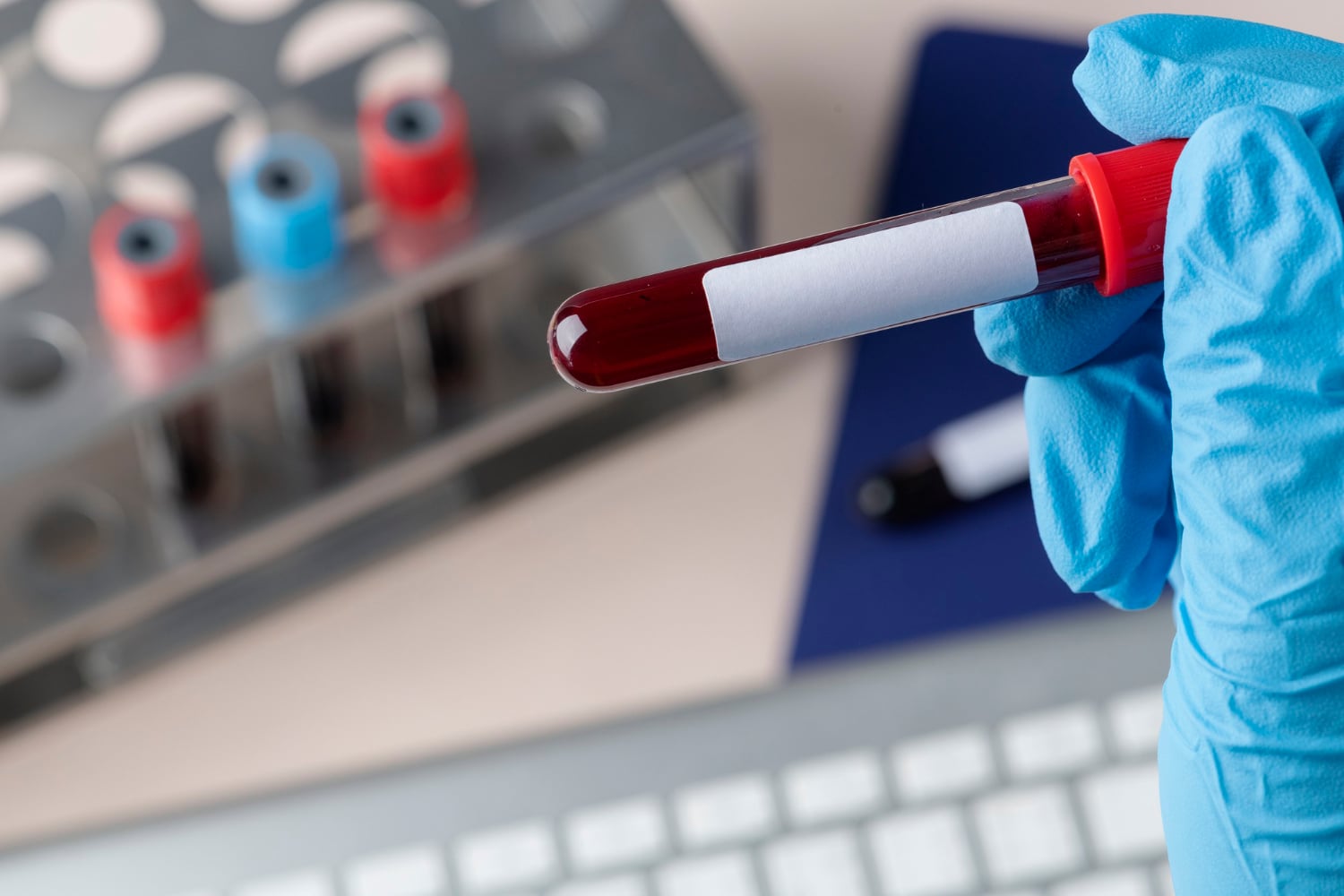
Few things in medicine are as routine, or as life-saving, as a blood transfusion. Patients receive them after accidents, during surgery, and through cancer treatment, and most never give it a second thought. Now a group of researchers is asking whether donated blood could carry more than blood. A new review in The Lancet examines whether proteins tied to Alzheimer’s disease might pass from donor to recipient, and the authors are careful to say the risk is unproven. Here’s what the evidence shows, what scientists want to find out next, and what it means for you.
Alzheimer’s May Not Always Develop on Its Own
Most people think of Alzheimer’s as a disease that arises on its own. Age, genetics, and lifestyle are the known drivers, which is why prevention advice focuses on things like blood pressure, sleep, exercise, and diet.
That still holds. But researchers now suspect it may not be the only way the disease emerges.
The suspect is amyloid-beta, the sticky protein that builds up in the brains of people with Alzheimer’s. Some scientists think it may behave like a prion, the type of infectious protein that causes healthy proteins to misfold into harmful ones. If that’s right, amyloid-beta could in theory pass from one person to another.
The first real-world evidence came in 2015, when a study suggested amyloid pathology might be transferable between humans through medical procedures. A 2016 study found more evidence of the same thing. In 2018, a paper proposed that contaminated surgical tools could carry Alzheimer’s proteins from one patient to the next.
Every example so far involves a medical procedure. Researchers have raised the question for procedures, not for everyday life.
Blood transfusions are where the evidence gets more specific.

The 2023 Study That Changed the Conversation
The turning point for blood transfusions came in 2023. A large population study from Denmark and Sweden, covering more than 1 million people, found something unexpected. People who received blood from donors who later developed an intracerebral hemorrhage (bleeding inside the brain) were more likely to have recurrent brain bleeds themselves, years after the transfusion.
This matters because of what usually causes spontaneous brain bleeds of this kind. Cerebral amyloid angiopathy (CAA) is a characteristic cause. It’s a separate condition from Alzheimer’s, but it also involves amyloid-beta protein, which builds up in the walls of blood vessels in the brain and makes them fragile.
So how would a recipient end up with it? According to neurologist John Collinge from University College London and his team, the “most biologically plausible explanation” is that the donors’ blood carried early amyloid-beta seeds that hadn’t yet developed into CAA. The transfusion then passed those seeds to the recipients.
The study shows an association. It does not prove that transmission occurred, and the researchers are careful not to claim otherwise. It also didn’t look at Alzheimer’s directly. The link to Alzheimer’s rests on the shared amyloid-beta protein, not on Alzheimer’s cases in transfusion recipients.
Even so, it’s the strongest signal so far that blood may carry more than blood.
Recommendations from The Lancet Review
The Lancet review, led by Collinge and colleagues, doesn’t claim that blood transfusions spread Alzheimer’s. It argues that the transmission of amyloid-beta through transfused blood and blood products is “a justifiable concern.” It also states plainly that there isn’t enough information yet to measure how big the problem is, or what technology would be needed to answer the key questions.
The team proposes three steps.
1. More large-scale studies. They want epidemiological analyses like the Scandinavian study to test whether transfusions transfer more than just blood.
2. Closer monitoring of higher-risk patients. People who need repeated transfusions, for example, receive blood from many donors over time, so they are the group the researchers name as a priority.
3. Screening donors with blood biomarkers. The idea is to build a system that checks whether Alzheimer’s blood biomarkers can flag donors who might carry amyloid-beta pathology. These are the same kinds of markers already being studied for diagnosing the disease.
Outside experts agree the current risk is small. Susan Kohlhaas of Alzheimer’s Research UK, who wasn’t involved in the paper, said the review identifies an important gap in knowledge. In her view, the authors make a case for research to establish whether transmission through blood is occurring, who might be most at risk, and whether measures are needed to reduce that risk.

Should You Worry About a Transfusion?
If the risk is theoretical, why raise it now? The authors point to history.
The UK Infected Blood Inquiry, which released its report in 2024, examined a scandal in which contaminated blood may have infected more than 30,000 patients between the 1970s and 1990s. It has been described as “the worst treatment disaster in the history of the National Health Service.”
Collinge says the inquiry is a cautionary tale about waiting for absolute certainty before making decisions on patient safety. His team also wants researchers and health authorities to be open and transparent about possible amyloid-beta risks, so that any risk to patients can be reduced early.
There is a second goal, and it matters just as much: keeping public trust in transfusions. Blood transfusions, as Collinge puts it, are important and save many lives. Someone who needs blood after major surgery, an accident, or during cancer treatment should not delay or refuse it because of a risk that hasn’t been shown to exist.
For readers, the takeaway is practical. Nothing in this research changes what you should do if a doctor recommends a transfusion. What it does change is what scientists are looking at: whether transmission through blood is happening, who might be most at risk, and whether donor screening is worth adding.
My Personal RX on Protecting Your Brain for the Long Run
The research on blood transfusions and Alzheimer’s is still early, and nothing in it changes what you should do today. What you can act on are the habits with the strongest evidence for protecting your brain as you age. Your risk of dementia comes from many factors, and a good number of them are in your hands.
I see this in my patients all the time. The people who do best over the years are rarely the ones chasing a single fix. They build small, steady habits around movement, sleep, food, and weight. Here are the tips I give my own patients.
- Move Your Body Most Days: Regular aerobic exercise, like brisk walking, keeps blood flowing to your brain and is one of the best-studied ways to lower dementia risk. Aim for at least 150 minutes a week. Break it into 30-minute walks if that’s easier.
- Know Your Blood Pressure Numbers: High blood pressure damages the small vessels in the brain, and it raises the risk of stroke and brain bleeds. Get it checked regularly, and if it’s high, work with your doctor to bring it down.
- Protect Your Sleep: Aim for seven to nine hours a night. Sleep is when your brain clears out waste, including amyloid-beta. Keep a regular bedtime and keep screens out of the bedroom. If you struggle to fall asleep, Sleep Max combines magnesium, GABA, 5-HTP, and taurine to calm your mind and support restorative REM sleep. Because 5-HTP can interact with antidepressants, check with your doctor first if you take one.
- Eat Like Your Brain Depends on It: Build your plate around vegetables, berries, nuts, olive oil, beans, and fish. Cut back on ultra-processed foods and added sugar. On days when vegetables fall short, a scoop of Super Greens adds full-spectrum superfoods to a smoothie or glass of water.
- Keep a Healthy Weight: Carrying extra weight in midlife is linked to a higher risk of dementia later on. Slow, steady loss works better than crash diets. My Weight Loss Bundle pairs MetaBurn, Protein Plus, and Magnesium Essentials with fat loss guides to help curb cravings, keep your energy steady, and preserve lean muscle.
- Keep Your Mind and Social Life Active: Learn a new skill, play cards, take a class, or join a group. Regular conversation and mental challenge both keep your brain working.
- Protect Your Head: Head injuries raise the risk of dementia later in life. Wear a helmet when you cycle or ride, buckle up, and remove tripping hazards at home, especially as you get older.
- Manage Your Stress: Long-term stress takes a toll on your sleep, your blood pressure, and your mood. Build a daily habit that brings it down, such as deep breathing, a walk outside, or a few quiet minutes before bed.
- Get Your Hearing and Vision Checked: Untreated hearing loss is a recognized risk factor for dementia, and problems with vision can limit how active and engaged you stay. Have both checked regularly and treat problems early.
- Put It All Into a Plan: Dr. Partha Nandi’s Protocol For Optimizing Your Health & Wellbeing brings sleep, nutrition, movement, and stress management together in one holistic guide, so you can turn these tips into a routine you keep.

Sources:
- Dockrill, P. (2026, August 25). Can Alzheimer’s Spread Through Blood Transfusions? Here’s What We Know.ScienceAlert. https://www.sciencealert.com/can-alzheimers-spread-through-blood-transfusions-heres-what-we-know
- Banerjee, G., Edgren, G., Zhao, J., Ferguson, N. M., Harvala, H., Hope, J., Jackson, G. S., Lowry, P. J., Mead, S., Purro, S. A., Schott, J. M., Turner, M. L., Werring, D. J., Zetterberg, H., & Collinge, J. (2026). Risk of transmission of amyloid β pathology via transfused blood products. The Lancet, 408(10556), 753–760. https://doi.org/10.1016/s0140-6736(26)00767-1