


You likely know that dietary fiber is important for basic digestion. What you might not realize is that keeping you regular is actually its secondary function. Fiber’s primary job is serving as the essential food source for the trillions of bacteria living inside your gut. Recent clinical studies reveal exactly how these microbes behave when you stop feeding them, and the biological mechanism is highly specific. When they run out of plant fiber, they do not simply wait for your next healthy meal. They actively seek an alternative fuel source, which forces them to begin consuming the very environment they live in: you.
The Dangerous Chain Reaction of a Low-Fiber Diet
I talk to patients about fiber every day. Most people assume its only job is to keep your digestion regular. The medical reality is far more critical. Your gut houses trillions of microbes that require a constant supply of food. Their preferred fuel is dietary fiber from the plants you eat. When you don’t feed them enough of it, they don’t simply wait for your next meal. They find another food source.
Your intestines are coated with a thick mucus lining. This mucus acts as a physical barrier, keeping your gut bacteria safely away from your intestinal walls. When you consume a low-fiber diet, your microbes become desperate. They start breaking down and eating the proteins that make up this protective mucus layer. They literally feed on you.
This causes a dangerous chain reaction. As the bacteria digest your own mucus proteins, they generate specific chemical waste products. Recent studies trace where these chemicals come from and show that when microbes consume host proteins from the gut lining, they produce harmful phenol metabolites. These “bad” phenols are derived from an amino acid called tyrosine. By skipping fiber, you are not just depriving your microbiome. You are forcing your gut bacteria to destroy your intestinal defenses, which directly increases the production of damaging compounds in your body.

The Overlooked Nutrient Your Gut Bacteria Crave: Plant Proteins
I always advise my patients to eat plants for the fiber, but recent studies reveal that plants secretly deliver a second payload to your gut: indigestible plant proteins.
Scientists have started calling these “proteins imitating fiber,” or Prifs. Unlike the proteins in meat or eggs that you easily digest and absorb in your small intestine, Prifs survive the journey down to your colon. There, they become a high-quality feast for your microbiome.
This is where the chemical shift happens. We discussed how starving microbes eat your mucus and produce harmful phenols from tyrosine. When your bacteria eat Prifs instead, they consume a plant-based amino acid called phenylalanine. Processing this specific amino acid causes the bacteria to churn out completely different, highly beneficial compounds, such as phenylpropionate and hippuric acid. These “good” phenols actively support gut health and are linked to maintaining a healthy body weight. You are essentially shifting your bacterial factory from producing toxic waste to manufacturing medicine. The clinical data on this is so concrete that researchers predict you might eventually see Prifs listed right alongside fiber on food nutrition labels.
Toxicity Versus Healthy Weight
I want to explain exactly what these different chemicals do in your body once they leave your gut. When your microbes are starved of fiber and forced to eat your intestinal mucus, they produce toxic byproducts like p-cresol sulfate and phenol sulfate. These are not benign waste. Clinical data links these specific harmful phenols to systemic toxicity, particularly in patients with kidney disease, and to poorer outcomes in cancer patients. This is what happens when your microbiome runs on the wrong fuel.
Contrast this with what happens when you feed your gut plant-based proteins, or Prifs. The bacteria shift production away from those toxins and start generating compounds like phenylpropionate and hippuric acid. We know from metabolic research that these beneficial phenols are directly associated with maintaining a healthy body weight and overall gut health.
There is another crucial biological factor here. We used to assume that your gut bacteria were solely responsible for making all of these metabolic compounds. But recent data shows your own cells can produce many of these phenols independently of your microbiome. Your body and your gut bacteria work in tandem. When you eat a diet rich in fiber and plant proteins, you give your entire metabolic system—both your human cells and your bacterial residents—the raw materials required to keep you lean and healthy, rather than driving cellular toxicity.

How to Feed Your Microbiome Properly
In my clinic, patients frequently ask for the bottom line on what they should actually eat. The clinical directive is straightforward: you need to consume whole, intact plants, not just isolated fiber supplements. While a generic fiber powder might help with basic bowel regularity, it completely lacks the complex plant proteins, or Prifs, required to optimally nourish your microbiome and shift your chemical output.
To protect your intestinal barrier, focus your meals around legumes, lentils, intact whole grains, nuts, and fibrous vegetables. These specific foods deliver the necessary dual payload of fiber and plant proteins. They keep your bacteria fed and physically away from your intestinal mucus. Conversely, relying on highly processed foods strips these essential structural components away. This leaves your gut bacteria starving and your intestinal lining vulnerable to degradation.
Your daily dietary choices dictate whether your gut bacteria act as an asset or a liability. By deliberately adding diverse, whole plant sources to your meals, you stop the breakdown of your mucus barrier and force your microbiome to produce beneficial, weight-regulating compounds instead of cellular toxins.
My Personal RX on Feeding Your Gut Before It Feeds on You
We all have days where we grab the quickest meal available. But when you consistently miss out on plant fiber and proteins, your starving gut bacteria will literally start eating your protective intestinal lining. This triggers the production of toxic byproducts that harm your cellular function.
You have total control over this process. By making a few realistic tweaks to your daily meals, you can keep your microbiome fed and stop it from producing toxins. Here are my personal tips to easily protect your gut barrier without overcomplicating your life.
- Upgrade Your Grocery Run: Skip the heavily packaged center aisles. To get the necessary dual benefit of fiber and plant proteins (Prifs), toss intact, whole foods like broccoli, black beans, and oats into your cart.
- Start Small: Do not overhaul your diet overnight. Add just one extra serving of fibrous vegetables or lentils to your dinner tonight so your digestive system can comfortably adjust.
- Ease the Transition: As you eat more beans and greens, your stomach might need a temporary assist. Take Digestive Enzymes for bloating and indigestion relief and maximum nutrient absorption while your gut gets used to breaking down these new foods.
- Keep Water Handy: Fiber acts like a sponge and needs water to move smoothly through your digestive tract. Keep a water bottle at your desk to prevent constipation and keep your microbiome working efficiently.
- Cover Your Bases on Busy Days: Some days, cooking a vegetable-heavy meal just is not going to happen. Keep Super Greens on hand; it is a powdered supplement that delivers the benefits of full-spectrum superfoods when you are short on time and need to nourish your system.
- Swap Your Snacks: Instead of reaching for processed crackers that starve your gut bacteria, grab a handful of almonds or pumpkin seeds. They provide the crunch you want along with the plant proteins your gut needs.
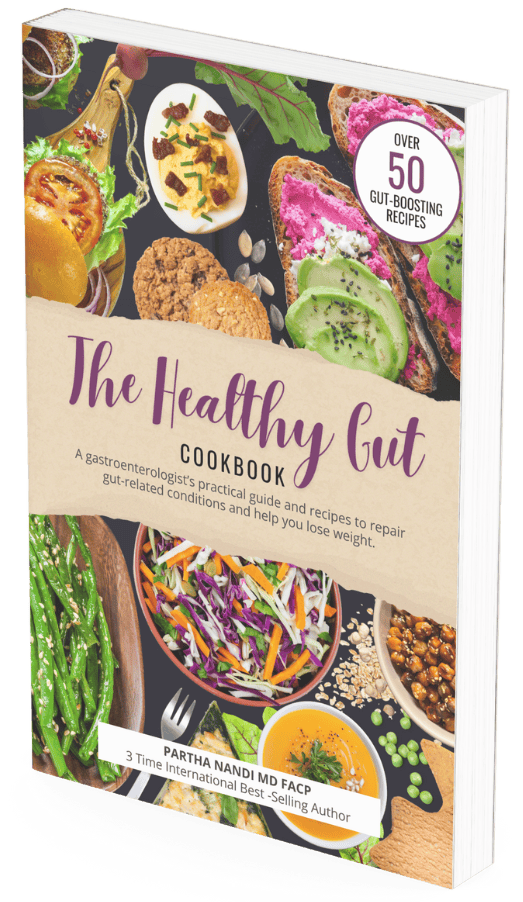
- Take the Guesswork Out of Dinner: Trying to figure out high-fiber meals from scratch can be frustrating. I highly recommend using the Healthy Gut Cookbook, a gastroenterologist’s practical guide and recipes to repair gut-related conditions and optimize gut health towards the path to overall wellness.
- Mix Up Your Veggies: Different gut bacteria prefer different plant fibers. Try buying one new vegetable or legume at the store each week to feed your entire microbial community, not just a fraction of it.
- Track Your Afternoon Energy: A properly fed microbiome supports a healthy weight and steady energy. Pay attention to how you feel a few hours after lunch; it is a reliable, everyday gauge for how well you are nourishing your gut.
- Understand Your Insides: Knowing how your body actually works makes it much easier to stick to good habits. Read Heal Your Gut, Save Your Brain to learn the science behind the gut-brain axis and a holistic approach to improving gut health and mental health.

Sources:
- AbuSalim, J. E., MacArthur, M. M., Gupta, M., Roichman, A., Hunter, C. J., Keber, F. C., Chatterjee, S., Moussavi, M., Barouei, J., Wühr, M., Sulakhe, D., Lehmann, C. J., Donia, M. S., & Rabinowitz, J. D. (2026). Digestion-resistant proteins support the healthy metabolite profiles associated with plant-based diets. Proceedings of the National Academy of Sciences, 123(32). https://doi.org/10.1073/pnas.2605226123
- AbuSalim, J. E., Olszewski, K., Youssef, S., Mitchell, S. J., Hunter, C. J., Little, J., Sidebottom, A., Boyer, J. A., Knutson, S. D., Samarah, L. Z., MacArthur, M. R., Henneberg, A. L., Ryseck, R.-P., Opitz, C. A., MacMillan, D. W. C., Donia, M. S., Pamer, E. G., Imam, S., Lehmann, C. J., … Rabinowitz, J. D. (2026). Host metabolism can produce many indoles and phenols independently of the microbiome. Nature Metabolism, 8(7), 1528–1544. https://doi.org/10.1038/s42255-026-01550-8