

The fight against Parkinson’s disease focused almost exclusively on the brain, with researchers searching for advanced pharmaceuticals to halt the progressive loss of motor control. However, one of the most promising recent breakthroughs in neurodegenerative research completely changes this paradigm. Instead of focusing top-down, the latest clinical data points directly to the digestive tract, uncovering a biological mechanism driven by gut bacteria that could soon lead to an unexpectedly simple, highly accessible treatment for a disease we have historically struggled to slow down.
The Early Warning Signs in the Digestive Tract
In my years of practice, patients typically come into the clinic for a Parkinson’s evaluation only after they develop tremors or stiff muscles. That is the standard medical timeline. But looking closely at patient histories reveals a very different story. Up to twenty years before these classic motor symptoms appear, the disease is already active in the body. It simply shows up as chronic constipation and disrupted sleep.
This timeline forced researchers and physicians to figure out why a neurodegenerative disease causes gut problems decades early. The answer points directly to the microbiome. The bacteria living in your intestines do more than break down food; they actively communicate with your nervous system. If the bacterial balance in your gut shifts, it triggers biological changes that eventually damage brain cells. Recognizing this early warning system in the digestive tract has completely changed our approach to the disease, directing us to target the gut to potentially stop the progression before it reaches the brain.

The Missing Vitamins and the Leaky Gut Connection
We now have concrete data showing exactly how missing specific nutrients accelerates this disease. A comprehensive 2024 analysis compared the gut bacteria of patients across multiple countries. Regardless of geography or local diet, people with Parkinson’s showed the exact same disruption: their microbiomes lacked the specific bacteria responsible for producing riboflavin (vitamin B2) and biotin (vitamin B7).
This specific deficiency triggers a destructive chain reaction. Your body needs these B vitamins to produce the molecules that build and maintain the thick protective mucus layer lining your intestines. Without adequate B2 and B7, that mucus barrier degrades. The result is increased intestinal permeability, which we commonly refer to as a leaky gut.
When the gut wall thins out, it fails to block everyday environmental toxins—such as pesticide residue or common household chemicals—from entering your system. This direct toxic exposure forces a protein called alpha-synuclein to abnormally clump together inside the nerves of the digestive tract. These toxic protein clumps activate an intense, long-term immune response. Over time, this damage travels up the nervous system directly into the brain, ultimately destroying the dopamine-producing cells that control normal muscle movement.
Resetting the Microbiome with Donor Transplants
If a damaged microbiome drives the disease, the logical next step is fixing that bacterial imbalance. Researchers are currently testing a highly effective, albeit unconventional, method to do this: fecal microbiota transplants. In plain terms, this involves taking processed stool from a healthy, rigorously screened donor and delivering it directly into a patient’s digestive tract. I realize this sounds extreme to many patients. But the clinical data shows it works.
Two recent placebo-controlled trials in Belgium and China tested this exact procedure on people with Parkinson’s. The outcomes were striking. In the Belgian trial, patients who received healthy donor bacteria saw their motor symptom scores improve by nearly six points over a year, while the placebo group saw less than half that improvement. The larger Chinese trial confirmed these findings, noting significant gains in muscle control and sharp improvements in chronic constipation after multiple transplant rounds.
We can actually measure the biological repair happening inside these patients. Following the donor transplants, harmful bacteria like E. coli decreased, and the patients’ gut linings grew notably thicker and stronger. Most importantly, the levels of that toxic alpha-synuclein protein in the gut went down. We now have proof of concept that physically replacing missing good bacteria directly improves the physical symptoms of Parkinson’s.

Targeting the Root Cause with Oral Supplements
While donor transplants clearly prove that fixing the gut works, they are intensive procedures. As a physician, I always look for the least invasive and most accessible option for my patients. The most exciting aspect of this new microbiome research is the unexpectedly simple treatment it points to: targeted vitamin therapy.
Since we now know the core issue stems from bacteria failing to produce riboflavin (B2) and biotin (B7), the practical solution might be to simply replace those missing nutrients. The lead researchers on the 2024 microbiome study proposed a very straightforward clinical protocol. We could screen individuals to identify these specific bacterial deficiencies. If their vitamin levels are low, we administer oral B2 and B7 supplements to help rebuild the intestinal mucus barrier, close the leaky gut, and halt the inflammatory cascade before the brain is severely damaged.
We actually have some historical precedent for this approach. A smaller clinical study back in 2003 showed that high doses of riboflavin helped restore certain motor functions in Parkinson’s patients. At the time, the medical community did not fully understand the exact mechanism behind the improvement. Today, we finally have the biological roadmap explaining exactly why it works. We still need rigorous clinical trials to confirm optimal dosing and long-term efficacy. However, the prospect of slowing a severe neurodegenerative disease with standard, low-cost vitamin supplements is a massive leap forward in practical patient care.
My Personal RX on Feeding Your Gut to Protect Your Brain
We often think of protecting our brain health as doing crossword puzzles or getting enough sleep. But what you put on your dinner plate has a massive impact on your nervous system. Your gut bacteria actively communicate with your brain. When your digestion is off, it can lead to brain fog, fatigue, and long-term cognitive issues.
You do not need a complete lifestyle overhaul to protect your gut-brain connection. Small, manageable habits add up over time and make a significant difference in how you feel daily. Here are my practical tips to keep your digestive tract healthy and your mind sharp.
- Sneak Fiber Into Meals You Already Eat: You do not need to switch to a strict raw vegan diet. Just add a handful of spinach to your morning smoothie, toss some kidney beans into your chili, or switch your standard pasta to a whole-grain version. Your gut bacteria thrive on this fiber.
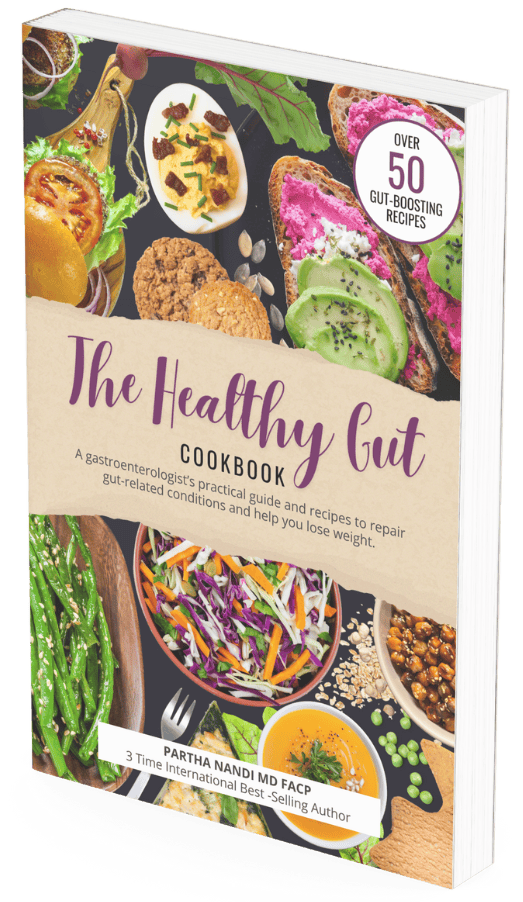
- Read Up on How Your Body Actually Works: Understanding why you feel sluggish or bloated makes it easier to change your habits. I wrote Heal Your Gut, Save Your Brain to explain the science behind the gut-brain axis in plain English. Keep it on your nightstand as a straightforward guide to improving your mental and physical health.
- Eat One Fermented Food a Day: Fermented foods contain natural probiotics that balance your microbiome. You do not have to eat large quantities. Add a spoonful of sauerkraut to your sandwich, drink a small glass of kombucha, or have a cup of yogurt with your breakfast.
- Take the Guesswork Out of Supplements: Trying to figure out exactly which vitamins to take every morning gets confusing. I recommend simplifying your routine with the Gut Brain Reset Bundle. It combines MindBiotic, Digestive Enzymes, and Eye Max to support your microbiome, optimize nutrient absorption, and maintain cognitive wellness all at once.
- Cook at Home Just One Extra Night: Ultra-processed takeout foods are hard on your intestinal lining. Pick one night a week where you normally order delivery and cook a simple meal at home instead. A piece of baked salmon with roasted broccoli is easy to make and highly protective for your gut.
- Keep Water Visible at Your Desk: Your digestive tract needs water to move food through the system and maintain its protective mucus layer. Keep a full water bottle in your direct line of sight at work so you actually remember to drink it throughout the day.
- Stop Ignoring Post-Meal Bloating: If you frequently feel overly full, sluggish, or bloated after eating a normal meal, your body is struggling to break down that food. Taking Digestive Enzymes right before you eat helps optimize your natural digestive process and ensures maximum nutrient absorption without the discomfort.
- Set a Hard Cutoff for Screens: Late-night phone scrolling ruins your sleep cycle, and poor sleep directly harms your gut bacteria. Turn off your television and put your phone on the charger in another room at least thirty minutes before you go to sleep.
- Take a Five-Minute Unplugged Walk: Chronic stress physically damages your gut barrier. You do not need an hour-long meditation session to lower your stress hormones. Simply stepping outside for a five-minute walk without looking at your phone gives your nervous system a necessary reset.
- Ask Questions Before Taking Antibiotics: Antibiotics are lifesavers for bacterial infections, but they wipe out your good gut bacteria in the process. If you have a standard viral cold, do not ask your doctor for a prescription. Save antibiotics strictly for when you have a confirmed bacterial illness.

Sources:
- Nishiwaki, H., Ueyama, J., Ito, M., Hamaguchi, T., Takimoto, K., Maeda, T., Kashihara, K., Tsuboi, Y., Mori, H., Kurokawa, K., Katsuno, M., Hirayama, M., & Ohno, K. (2024). Meta-analysis of shotgun sequencing of gut microbiota in Parkinson’s disease. Npj Parkinson’s Disease, 10(1). https://doi.org/10.1038/s41531-024-00724-z
- Bruggeman, A., Vandendriessche, C., Hamerlinck, H., Danny De Looze, Tate, D. J., Vuylsteke, M., Lindsey De Commer, Devolder, L., Raes, J., Verhasselt, B., Laukens, D., Vandenbroucke, R. E., & Santens, P. (2024). Safety and efficacy of faecal microbiota transplantation in patients with mild to moderate Parkinson’s disease (GUT-PARFECT): a double-blind, placebo-controlled, randomised, phase 2 trial. EClinicalMedicine, 71, 102563–102563. https://doi.org/10.1016/j.eclinm.2024.102563
- Zhang, R., Feng, R., Wang, J., Chen, Y., Liu, H., Zhu, Q., Tian, H., Qin, C., Teng, J., Tang, B., Wu, M., Zeng, J., Wu, E., Ding, X., & Wang, X. (2026). Gut microbiota modulation via repeated donor fecal transplantation improves motor and gastrointestinal symptoms in drug-naïve Parkinson’s disease: a randomized phase 2 trial. Signal Transduction and Targeted Therapy, 11(1). https://doi.org/10.1038/s41392-026-02604-9