

Ask most people what drives climate change and they’ll point to cars and smokestacks. Few would name what’s on their dinner plate. Yet a study in the journal Climate Policy argues that food production belongs in that conversation, and that leaving it out puts our climate targets at risk. The researcher behind it isn’t asking anyone to go vegan tomorrow. She’s proposing a plan that is far more gradual, and it may change how you think about your next meal. Here’s what the study found, what it doesn’t claim, and how to make changes that are good for your health and the planet.
How Much Do Farm Animals Contribute to Climate Change?
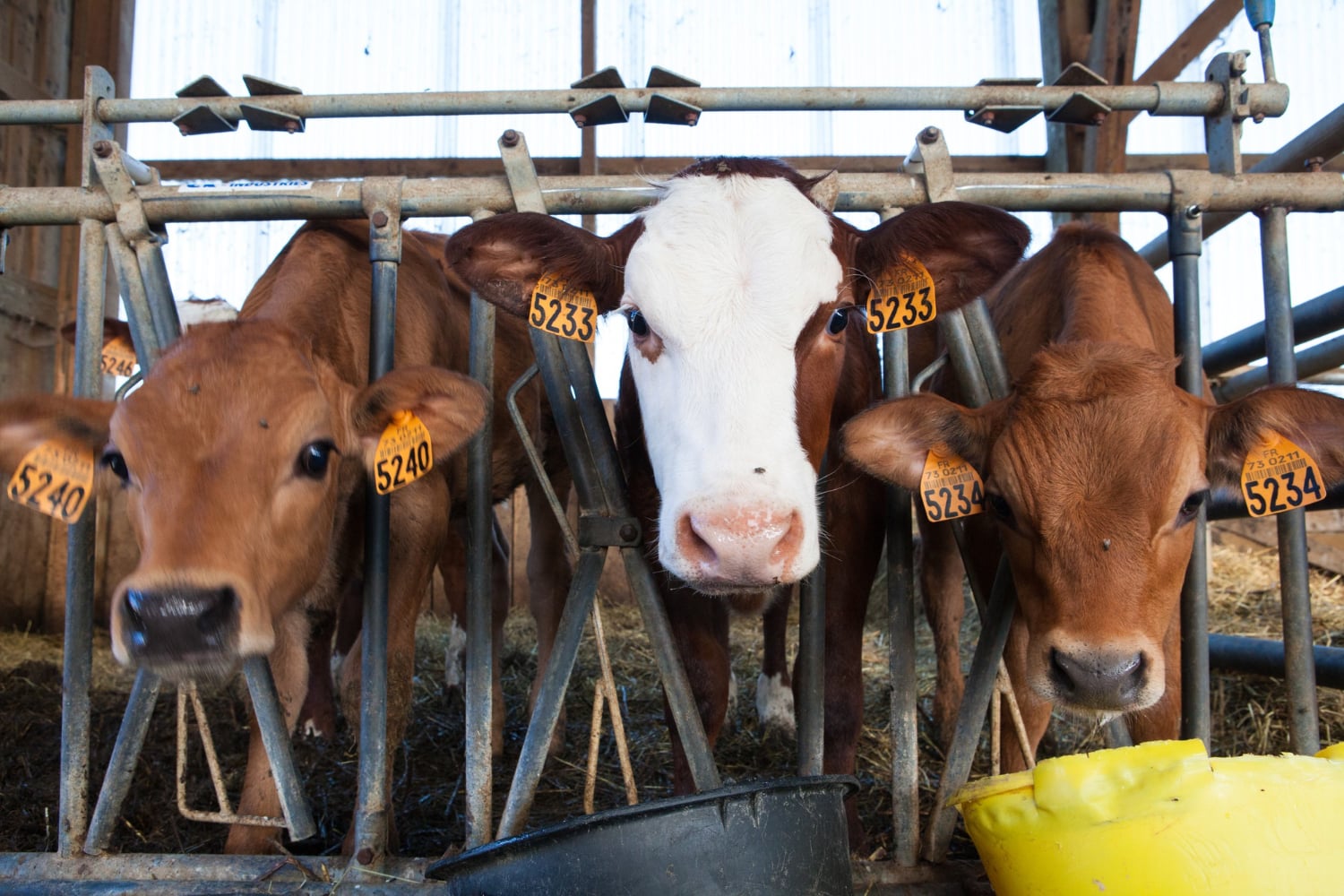
What we eat affects the climate more than most people realize. A study published in the journal Climate Policy puts a number on it. If nothing changes, the livestock sector could use between 37 and 49 percent of the greenhouse gas emissions the world can release by 2030 and still stay under the 2°C and 1.5°C Paris Agreement temperature limits, respectively. That total allowance is called an emissions budget.
The main reason is methane. Roughly 28 billion animals are farmed for human consumption, and they are the largest source of both methane and nitrous oxide. Carbon dioxide gets most of the attention, but methane traps about 85 times more heat than carbon dioxide over a 20-year period. Livestock methane emissions are also projected to rise by 60 percent by 2030, the same window in which we need to cut emissions sharply.
The study’s author, Dr. Helen Harwatt, a farmed animal law and policy fellow at Harvard Law School, draws a clear conclusion. Moving protein sources from animals to plants is one of the most effective steps available. If we skip it, other sectors would have to make extra emissions cuts, and she describes those cuts as unrealistic. Without that shift, the risk of overshooting our temperature goals goes up.

The Three-Step Strategy for Shifting to Plant Protein
Harwatt doesn’t ask the world to go vegan overnight. Her paper proposes a three-step plan for gradually replacing animal protein with plant protein.
Step 1: Acknowledge “peak livestock.” This means accepting that livestock numbers have to start falling from here on. Right now, the trend runs the other way.
Step 2: Set targets, starting with the worst offenders. Not all animal products produce the same amount of emissions. Beef and lamb are among the highest, so they come first under what Harwatt calls a “worst first” approach. Targets would push for large, fast reductions in those products before moving on to lower-impact ones.
Step 3: Choose the replacement foods carefully. Swapping one food for another only helps if the replacement is a good one. Harwatt calls for judging substitutes on three things: greenhouse gas emissions, health benefits, and land use. She refers to this as a “best available food” approach.
She also wants this built into national policy. Countries are revising their Paris Agreement commitments, known as Nationally Determined Contributions, from 2020 onward. She argues those updates should include animal-to-plant protein shifts, and that countries will need support, including climate funding, to carry them out. The COP24 climate conference, held in December 2018, was her suggested starting point for that conversation.
The strategy also works on a smaller scale. Harwatt already applies it in food service as a sustainable food policy advisor to Humane Society International UK, whose Forward Food program trains chefs in plant-based cooking. At the institutional level, she can measure a kitchen’s food-related emissions, cap its purchases of animal products, and replace the highest-emitting ones first.
Why Diet Alone Can’t Meet Our Climate Goals
Changing what we eat helps, but it can’t do the whole job. It’s unrealistic to expect every country to go vegan, and certainly not within the timeframe we have. Even if they did, food is only one part of the problem.
Other sectors produce a large share of emissions. About 25 percent of global greenhouse gases come from energy production, 21 percent from manufacturing, and 14 percent from travel. Together, those three account for roughly 60 percent. Cutting animal products would leave all of that untouched.
The study makes the same point from the other direction. Harwatt writes that strong and rapid emission cuts, far beyond what countries have committed to so far, are needed to meet the Paris Agreement goals. That leaves no sector free to carry on as usual, livestock included. Farming is one piece of the solution, not a replacement for changes in energy, industry, and transport.
There is also a reason not to wait for a technological fix. Some climate plans count on “negative emission technologies,” which are methods that remove carbon dioxide from the air after it has been released. Harwatt argues for a precautionary approach: don’t build the plan around tools that aren’t yet proven at scale. Cutting emissions at the source, including from livestock, lowers that risk.
Put simply, moving toward plant-based eating is one of several large changes required, and it’s one that individuals and institutions can start on now.

More People Are Eating Less Meat
Some people aren’t waiting for policy. Plant-heavy eating is already growing in parts of the world, driven by environmental, ethical, or health reasons.
The UK shows the clearest shift. Over four years, the number of Britons identifying as vegan rose from 150,000 to 600,000, according to Vegan Society figures. A wider group has changed too: about a third of Britons have deliberately stopped or reduced their meat intake, based on a 2018 survey report.
The US looks different on paper. The share of Americans who identify as vegan or vegetarian has stayed fairly stable for about 20 years. That number misses part of the picture, though. Americans have been eating less meat and dairy over that time, even if they don’t use those labels.
This matters because the climate benefit doesn’t depend on everyone giving up animal products. Reducing intake counts, and it fits the gradual approach Harwatt describes: start with the highest-emitting foods and replace them with better options. For most of my patients, that is a more realistic starting point than an all-or-nothing switch.
My Personal RX on Eating More Plants Without Missing Nutrients
Eating less meat helps the climate, and it can help your health too. Plant-rich diets are linked to a lower risk of heart disease. Cutting animal foods too fast, though, can leave gaps in protein, iron, and B12 and upset your digestion. Here is what I tell my patients.
- Start With One Swap: Replace beef with beans or lentils at two or three dinners a week. Beef is among the highest-emitting foods, so it’s the best place to begin.
- Add Fiber Slowly: Increase beans, whole grains, and vegetables over several weeks. A big jump causes gas and bloating.
- Ease Digestion: Beans and lentils can be hard on your gut at first. Taking Digestive Enzymes with meals can help you break them down more easily.
- Mix Your Proteins: Eat beans, lentils, tofu, nuts, seeds, and whole grains throughout the day to cover your amino acids.
- Boost Iron Absorption: Pair beans and leafy greens with vitamin C foods like peppers or citrus. Your body absorbs plant iron better that way.
- Check Your B12: If you cut out most animal foods, ask your doctor to test your B12 level. Plant foods contain very little of it.
- Cover Common Gaps: If you’re eating less meat and dairy rather than none, omega-3s, calcium, and vitamin D are the nutrients I watch. The Core Four Bundle covers all three, plus a probiotic for your gut.
- Cook in Batches: Make a big pot of lentil soup or bean chili on Sunday. Meals on hand keep you from defaulting to takeout.
- Feed Your Gut Bacteria: Fiber feeds the bacteria in your gut, and they influence your mood and brain. My book Heal Your Gut, Save Your Brain explains how.
- Track How You Feel: Note your energy, digestion, and sleep for a few weeks, and adjust. Talk to your doctor before major diet changes, especially if you take medication or have a health condition.

Sources:
- McCall, R. (2018, November 27). Veganism Could Take Us Halfway To Meeting Our Climate Goals, Study Says. IFLScience. https://www.iflscience.com/veganism-could-take-us-halfway-to-meeting-our-climate-goals-study-says-50735
- Harwatt, H. (2018). Including animal to plant protein shifts in climate change mitigation policy: a proposed three-step strategy. Climate Policy, 19(5), 533–541. https://doi.org/10.1080/14693062.2018.1528965