


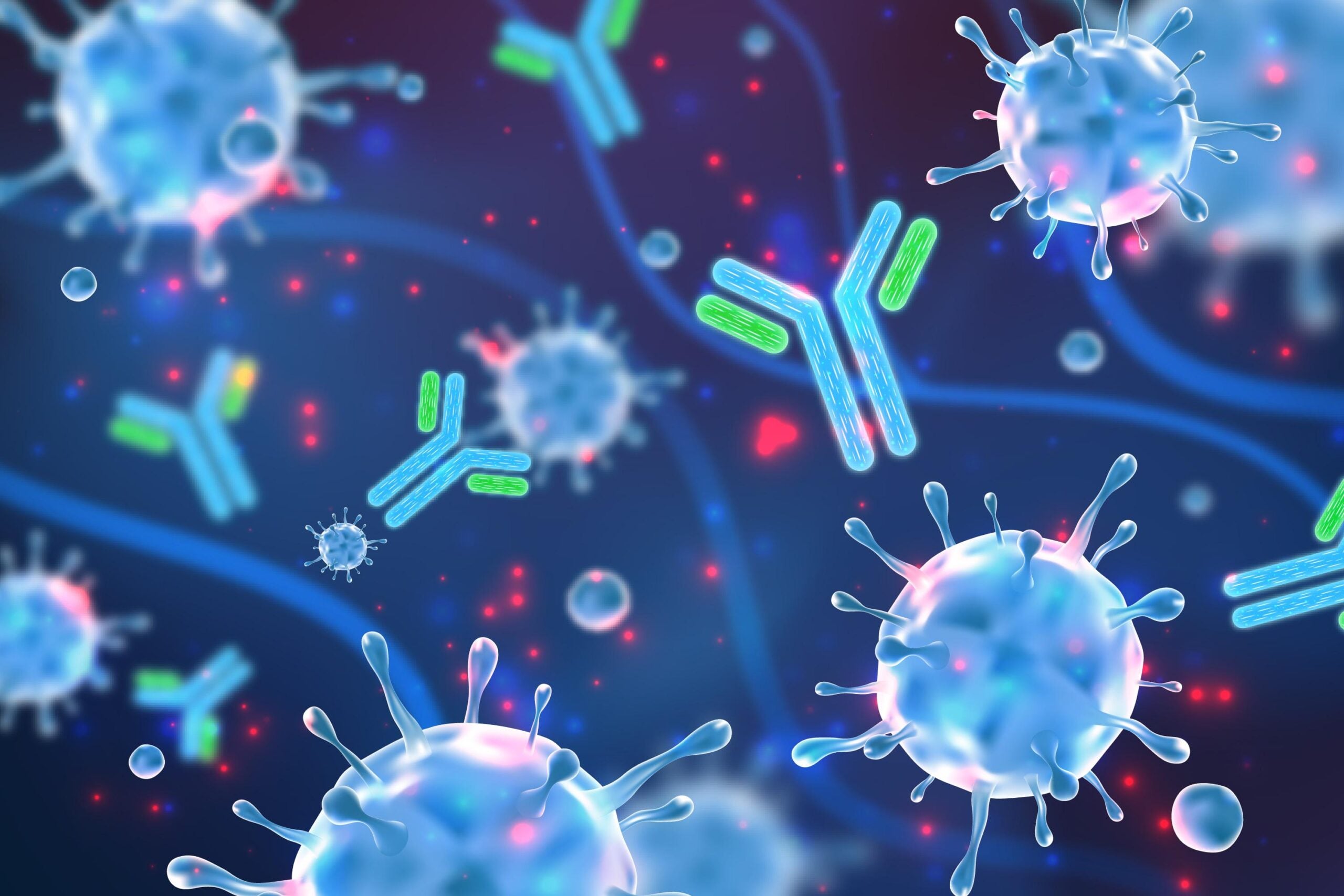
As a doctor, I often explain to my patients that some of our greatest medical challenges come from viruses that simply refuse to leave the body after the initial infection. We have spent decades trying to figure out how to stop these lifelong residents from causing severe complications down the road, and for a long time, researchers kept hitting a dead end. Now, a major laboratory breakthrough has shifted our strategy entirely. By engineering highly targeted antibodies, scientists have found a practical way to physically lock one of the world’s most common viruses out of our immune system, providing a clear blueprint to protect our highest-risk patients.
The Reality of the Epstein-Barr Virus
Let’s look at the numbers. The Epstein-Barr virus (EBV) infects roughly 95 percent of adults worldwide. Most of you reading this already carry it. When you first contract EBV, it typically presents as infectious mononucleosis, commonly known as glandular fever. You experience fatigue, a sore throat, and swollen lymph nodes. Then, you recover.
But the virus does not leave. It stays in your body for life.
EBV is highly efficient at surviving. It enters a dormant state, hiding directly inside your B cells. These are white blood cells that function as a core part of your immune system. Because the virus binds to nearly every B cell it encounters, our bodies struggle to generate specific immune cells that can recognize and neutralize the threat. This is exactly why developing antibodies against EBV has historically been so difficult.
For a healthy person, this dormant virus might never cause another issue. However, EBV is directly linked to several serious, long-term health complications, including multiple sclerosis and various cancers.
The threat increases significantly if your immune system is compromised. A dormant virus can reactivate. We see this frequently in patients requiring immunosuppressive drugs for organ and bone marrow transplants. When the virus reactivates in these vulnerable states, it drives out-of-control lymphocyte growth. This leads to life-threatening conditions like post-transplant lymphoproliferative disorders (PTLD). To protect these patients, we need a reliable medical mechanism to block EBV from taking hold in the immune system in the first place.

Targeting the Virus’s Entry Mechanism
To understand how researchers from the Fred Hutchinson Cancer Center and the University of Washington bypassed the virus’s defenses, we have to look at how Epstein-Barr actually breaks into your immune cells.
The virus relies on two specific proteins on its surface to establish an infection:
- gp350: This protein acts as the anchor. It allows the virus to latch onto the receptors of your human cells.
- gp42: This protein acts as the key. It allows the virus to fuse directly with the cell membrane and push its genetic material inside.
If we can block these proteins, we stop the infection before it starts.
To create a blockade, the research team used mice genetically engineered to carry human antibody genes. This was a calculated step. If you develop an antibody in a standard animal model, the human body will often recognize it as foreign and attack it. By using humanized mice, the scientists generated fully human monoclonal antibodies that our bodies are far more likely to accept.
When the team exposed these engineered mice to the gp350 and gp42 proteins, the mice produced the precise immune response the researchers were looking for. The team successfully isolated ten new antibodies in the lab—two targeting gp350 and eight targeting gp42.
The results were clear. When tested in mice with human-like immune systems, one specific antibody directed at the gp42 protein completely prevented EBV infection. It effectively jammed the lock, stopping the virus from fusing with the B cells. Another antibody targeting gp350 offered partial protection.
Protecting Our Most Vulnerable Patients
This laboratory success has immediate, real-world implications, particularly in transplant medicine. Hundreds of thousands of organ and bone marrow transplants are performed globally each year. To prevent a patient’s body from rejecting a new organ, we must prescribe heavy immunosuppressive medications.
This necessary suppression leaves the patient highly vulnerable to reactivated EBV. If the dormant virus wakes up while the immune system is chemically depressed, B cells can multiply out of control. This causes post-transplant lymphoproliferative disorders (PTLD), which are life-threatening, cancer-like conditions.
By administering these new antibodies, we can potentially prevent the virus from circulating in the blood and stop PTLD before it develops. This means doctors wouldn’t have to face the dangerous choice of reducing a patient’s immunosuppression medication to fight the virus, which risks rejecting the transplanted organ entirely.
This preventative measure is especially critical for pediatric transplant patients. Children are less likely to have prior exposure to EBV, meaning they lack any natural immune memory to fight it off if they receive an organ from an infected donor.
The next step for this research is human safety testing and clinical trials. While other scientists are simultaneously working on an EBV vaccine, this antibody discovery provides a direct method for passive immunity. For the medical community and our highest-risk patients, it is a massive step forward in managing a virus we previously could not control.

The Future of Prevention and Passive Immunity
This development shifts how we approach virology. For decades, the scientific community has been searching for a viable way to protect people against the Epstein-Barr virus. Most of that effort has focused on developing a traditional vaccine.A vaccine works by introducing a harmless fragment of the virus to teach your immune system how to create its own antibodies.
However, because EBV is so adept at evading our natural immune response by hiding in our B cells, creating an effective vaccine has proven incredibly difficult.
This new research takes a different path: passive immunity. Instead of asking the patient’s body to figure out how to fight the virus, we deliver the exact, pre-manufactured antibody directly into their system. The heavy lifting is done in the lab,not by the patient’s compromised immune system.
The next critical phase is transitioning this work from animal models to human safety testing and clinical trials. We need to verify that these engineered human antibodies are safe, well-tolerated, and effective in human patients.
Beyond EBV, this methodology provides a blueprint. The researchers validated an entirely new approach for discovering protective antibodies using humanized mice. We can potentially apply this same process to other elusive pathogens that have historically evaded vaccine development. It is a major step forward for those at the highest risk of viral complications.
Here is the revised section, replacing the MindBiotic tip with one that integrates Digestive Enzymes.
My Personal RX on Strengthening Your Defenses Against Stealth Viruses
While researchers make progress on antibody treatments for the Epstein-Barr virus, you must focus on what you can control right now: your daily immune health. Since 95 percent of adults already carry EBV, the goal is keeping the virus dormant. A weakened immune system gives latent viruses the opportunity to reactivate and cause serious complications.
You have the power to build an internal environment that keeps these viruses in check. By committing to fundamental health practices, you give your immune cells the specific resources they need to function. Here are my practical tips for maintaining a strong immune defense.
- Prioritize Consistent Sleep: Your body repairs itself during sleep. Aim for seven to eight hours of quality sleep each night to ensure your immune cells can properly regenerate and respond to viral threats.
- Manage Chronic Stress: Long-term stress elevates cortisol levels, which directly suppresses your immune function. Implement daily stress reduction techniques like deep breathing or walking to keep your hormone levels balanced.
- Optimize Nutrient Absorption: Your gut houses over 70 percent of your immune system, and its strength depends entirely on the nutrients you absorb. Taking Digestive Enzymes ensures your body effectively breaks down your food, allowing you to absorb the critical vitamins and minerals required to maintain a healthy microbiome and keep latent viruses dormant.
- Maintain Proper Hydration: Your lymphatic system relies on water to carry infection-fighting white blood cells throughout your body. Drink plenty of water daily to keep this system moving efficiently.
- Eat Nutrient-Dense Foods: Focus on a diet rich in whole foods, specifically those high in vitamins C and E, zinc, and antioxidants. Citrus fruits, nuts, seeds, and leafy greens provide the direct building blocks your immune system needs to operate.
- Read Heal Your Gut, Save Your Brain: To truly understand how to protect your body, you need to understand the connection between your digestive system and your overall immunity. My book Heal Your Gut, Save Your Brain provides actionable medical insights on how gut health dictates your ability to fight off viral reactivation.
- Exercise Regularly: Moderate, consistent physical activity promotes good circulation. This allows your immune cells and other infection-fighting molecules to move more freely and efficiently throughout your bloodstream.
- Limit Refined Sugars: High sugar intake can temporarily impair your white blood cells’ ability to attack foreign invaders. Cut back on processed sweets to ensure your immune response remains sharp.
- Check Your Vitamin D Levels: Vitamin D is critical for immune regulation. Have your doctor check your levels, and consider a supplement or safe sun exposure if you are deficient, as low levels are linked to increased susceptibility to infections.
- Avoid Additional Infections: Wash your hands regularly and practice basic hygiene. Preventing common colds and other acute infections stops your immune system from being overworked, allowing it to maintain control over dormant viruses like EBV.

Sources:
- Nield, D. (2026, September 11). Scientists Create New Antibody For Virus That Infects 95% of People. ScienceAlert. https://www.sciencealert.com/scientists-create-new-antibody-for-virus-that-infects-95-of-people
- Chhan, C. B., Lang, K., Davis, A. R., Wan, Y.-H., Aldridge, N. T., Kher, G., Scharffenberger, S. C., Hardy, S. R., Iureniev, R., Giltiay, N. V., Edwards, K. R., Radtke, S., Kiem, H.-P., Pancera, M., & McGuire, A. T. (2026). Transgenic mouse-derived human monoclonal antibodies targeting EBV gp350 and gp42 provide basis for therapeutic development. Cell Reports Medicine, 7(2), 102618. https://doi.org/10.1016/j.xcrm.2026.102618