

Most of us use tomato paste for flavor and little else. A recent clinical trial tested what happens when it becomes a daily habit, and the effects appeared in two places: on cognitive tests and on brain scans. The changes were modest and the evidence is early, but the results raise a bigger question about how much everyday food influences the way our brains work. Some of the answers are more specific than you might expect, and some come with limits worth knowing before you change your grocery list.
Can a Daily Dose of Tomatoes Boost Your Brain?
Tomatoes get their red color from lycopene, an antioxidant that can cross the blood-brain barrier. That barrier blocks most substances in your blood from reaching your brain. Once lycopene gets through, it may help reduce oxidative stress and inflammation, two processes tied to brain diseases like Alzheimer’s.
Earlier research pointed in the same direction, but it was thin. Most studies were observational, meaning they only showed that people who ate more tomatoes tended to score better on thinking tests. The few trials that used tomato or lycopene combined them with other foods or compounds, mostly in older adults. No randomized trial had tested tomato on its own in healthy adults.
A team at the University of Barcelona in Spain set out to change that. They enrolled 47 healthy adults between 40 and 55 years old. None had a chronic disease, none smoked, and all had a body mass index under 30. Forty-two finished the study, which was published in the journal Antioxidants.
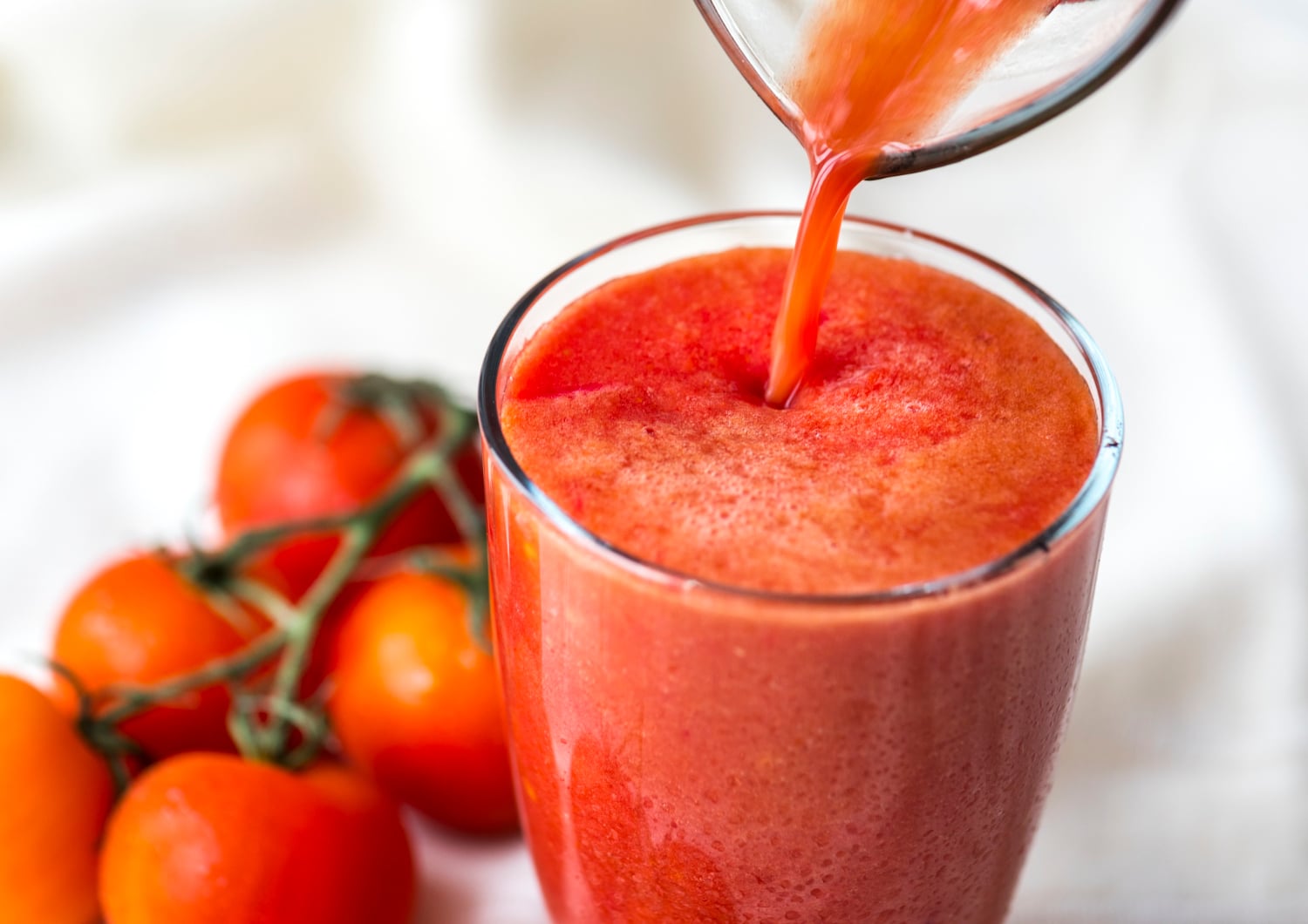
Each person completed two three-month diets. On the tomato diet, they ate about 35 grams of tomato paste a day, raw or cooked into meals. The paste contained only tomatoes and salt, and it delivered roughly 38 mg of lycopene daily. On the control diet, they avoided tomatoes and other lycopene-rich foods, including watermelon, papaya, grapefruit, and guava.
A one-month break separated the two diets so lycopene levels could return close to normal. Because everyone followed both diets, in a randomized order, each participant served as their own comparison.
The researchers took blood samples to track lycopene levels and confirm who followed each diet. They also tested attention, memory, and problem-solving skills at the start and end of each phase.

Attention and Memory Improve on a Tomato-Rich Diet
After three months of eating tomato paste daily, people did better on tests of attention and memory.
Attention was tested with a pencil-and-paper task. Participants scanned rows of letters and had 20 seconds per row to mark only the “d” letters that had two dashes. Compared with the control diet, the tomato diet raised concentration scores by 7.2 points and speed scores by 8.3 points.
Memory was tested with faces and names. Participants studied 12 faces paired with names. Fifteen minutes later, they had to pick the right name for each face from three choices. The tomato diet improved their matching score by 0.8 points out of 12. That is a small gain, but it held up after the researchers adjusted for the number of tests they ran.
Problem-solving and mental flexibility did not change on either diet. Scores also stayed flat during the control phase.
Blood tests offered a possible explanation. Lycopene levels nearly doubled on the tomato diet, and people whose levels rose the most tended to improve the most on the attention tests. The link was modest, though.
The researchers also ran a second analysis that included only the participants whose blood levels confirmed they followed both diets. In that group, the attention gains were about twice as large: 13.7 points for concentration and 14.7 points for speed.
What Brain Scans and Blood Work Revealed
Some participants also had brain scans. Fourteen people agreed to a resting-state MRI, which shows how different brain regions communicate with each other while a person lies still and does nothing.
After the tomato diet, connectivity dropped in two networks: the right frontoparietal network, which helps control attention, and the auditory network, which processes sound. After the control diet, connectivity dropped in a different network, the dorsal attention network, which helps you stay focused on a task.
Less connectivity is not necessarily bad here. The researchers suggest the tomato diet may have trimmed unnecessary communication between networks, making the brain more efficient. Similar changes have been seen after people train their working memory. The auditory finding fits this idea, since less background noise in that network could leave more capacity for visual tasks like the attention test.
The scan results also lined up with the memory scores. People with the biggest drops in auditory and frontoparietal connectivity tended to do better on the face-name task. People whose lycopene levels rose the most also showed more of these connectivity shifts.
The team also measured BDNF, a protein linked to the growth and survival of brain cells. BDNF was higher after the tomato diet, by an average of 15.2 ng/mL. The increase was borderline, and BDNF changes did not track with test score gains. The researchers describe this finding as preliminary.
Together, the scans and blood work suggest tomato paste changed how the brain works, not only how people performed on tests. Still, these results came from a small group and need confirmation.

A Promising Lead, Not a Prescription
This was a well-designed trial, but it has limits that matter when you decide how much to trust it.
- Participants and researchers knew who ate what. Nobody could be blinded, because tomato paste looks and tastes like tomato paste. People who know they are on a “brain-boosting” diet may try harder on tests. The researchers argue the attention test is demanding enough to limit this effect, but they cannot rule it out.
- The control group had no placebo. Instead, they followed a diet that cut out tomatoes and other lycopene-rich foods. So the differences between the two phases could partly come from the restriction itself, not only from the tomato paste.
- The brain scan data is the weakest part. Only 14 people were scanned, which is too few for firm conclusions. The connectivity changes also appeared only under a more lenient statistical threshold than the one the researchers originally planned to use. Treat them as a lead, not a finding.
- The group was narrow. Most participants were women, and nearly all had a college or postgraduate education. Results may differ in other groups. Health status was also screened by self-report, and a few people turned out not to meet the criteria.
- Lycopene may not be the cause. Tomatoes also contain vitamins, other carotenoids, and plant compounds that could affect the brain. The study tested tomato paste, not lycopene alone.
- Gains were small, and their lasting value is unknown. The study ran for three months. We do not know if the benefits last, or if they translate into better daily function or lower dementia risk. No study has yet proved cause and effect here.
The authors call for larger, longer trials before anyone draws broader conclusions.
My Personal RX on Eating for a Sharper Mind
Food can support your brain, but it works best alongside other daily habits. The tomato study is early, yet the basics are easy to act on now. Here are the steps I personally recommend.
- Add Tomato Paste to Your Meals: Stir a spoonful into soups, stews, or eggs. The study used about 35 grams a day.
- Cook Your Tomatoes: Heat breaks down tomato cell walls, which makes lycopene easier to absorb. Sauces count.
- Add Olive Oil: Lycopene dissolves in fat, so a little olive oil with your tomatoes helps absorption.
- Eat a Variety of Colors: Berries, leafy greens, and peppers supply different antioxidants than tomatoes do.
- Support Nutrient Absorption: Good food only helps if your body absorbs it. I suggest Digestive Enzymes to support healthy digestion and nutrient absorption.
- Fill Common Gaps After 40: Nutrient needs shift in midlife. My Core Four Bundle combines Omega-3 Fish Oil, Ultra Cal-Mag, Vitamin D3 + K2, and MindBiotic to cover the most common ones.
- Walk Daily: Regular movement supports blood flow to the brain. Start with 20 to 30 minutes.
- Protect Your Sleep: Aim for seven to nine hours. Your brain sorts and stores memories while you sleep.
- Practice Remembering Names: Repeat a person’s name when you meet them, then use it in the conversation.
- Learn the Gut-Brain Link: My book Heal Your Gut, Save Your Brain explains how digestion affects brain health.

Sources:
- Cassella, C. (2026, September 9). Scientists Had People Eat Tomato Paste For 3 Months. Their Brain Scans Looked Different. ScienceAlert. https://www.sciencealert.com/scientists-had-people-eat-tomato-paste-for-3-months-their-brain-scans-looked-different
- Prada, L. (2026, September 11). Eating This Common Food Every Day Could Change Your Brain, Study Finds. VICE. https://www.vice.com/en/article/eating-this-common-food-every-day-could-change-your-brain-study-finds/
- López-Solís, R., Donat-Vargas, C., Ramírez-Carrasco, P., Gutiérrez-Romero, R. M., Pérez, M., Castellví, M., Bosch, B., Arancibia-Riveros, C., Hinojosa-Moscoso, A., Laredo, C., Muñoz-Moreno, E., Ruiz-Leon, A. M., Casas, R., Estruch, R., Vallverdú-Queralt, A., Corrado, M., & Lamuela-Raventós, R. M. (2026). Tomato Intake Improves Cognitive Performance and Modulates Functional Brain Networks in Healthy Adults: A Randomized Crossover Clinical Trial. Antioxidants, 15(5), 644. https://doi.org/10.3390/antiox15050644