


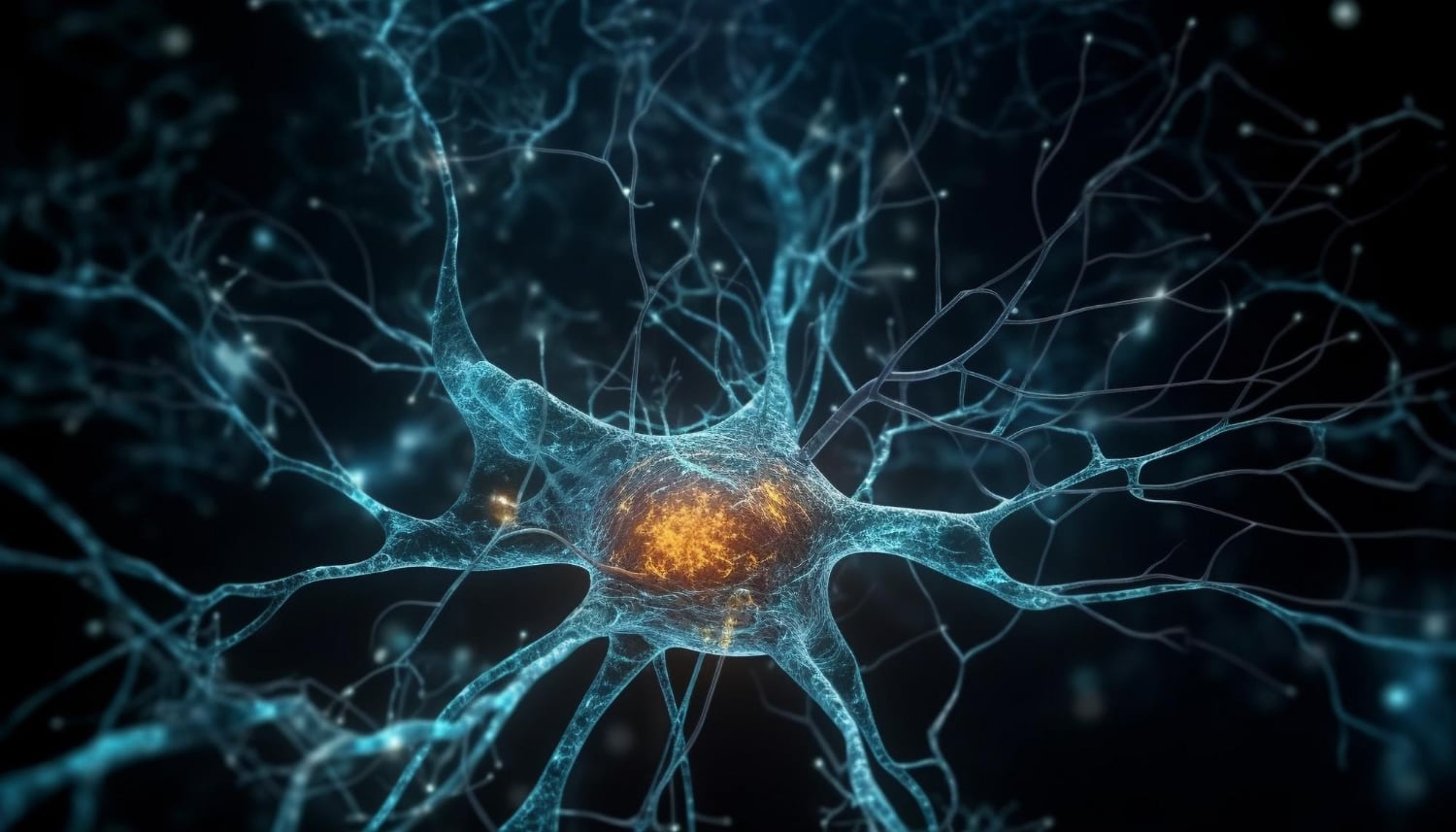
Alzheimer’s disease has resisted decades of research, so a study reporting improved memory and behavior after just two injections deserves a careful look. The results come from mice, not people, and that distinction matters. But the way this treatment works is unusual, and it raises a question researchers have debated for years. Here’s what the team did, what they found, and what it could mean for people.
Rebuilding the Brain from Within
Alzheimer’s disease destroys neurons, the cells that carry signals through the brain. As they die, memory and thinking decline. Current treatments can slow the disease, but they can’t replace the neurons already lost, because the adult human brain has a very limited ability to repair itself.
Researchers at the University of South Carolina set out to close that gap. Their treatment, called Nano-ERASER, is a polymer nanogel system. It doesn’t try to protect the neurons you have left. It aims to create new ones.
The target is a cell type called astrocytes. These star-shaped support cells are abundant throughout the central nervous system, and they don’t normally work as neurons. The treatment prompts them to convert into neurons.
The team, led by pharmaceutics professor Peisheng Xu, reported the results in Cell Biomaterials. They tested the approach in two settings: human astrocyte cultures and brain organoids (lab-grown tissue designed to mimic brain tissue affected by Alzheimer’s), and live mice with Alzheimer’s disease.
Xu’s team also stresses that the study doesn’t show Nano-ERASER treats Alzheimer’s in humans. Everything so far comes from cells, organoids and mice.

How Nano-ERASER Works
Getting a drug into the brain is hard. The blood-brain barrier, a tight boundary that keeps most drugs and molecules out, blocks nearly everything. These engineered nanoparticles cross it and enter astrocytes directly.
Once inside, the particles release antibodies that break down a protein called PTBP1. Lowering PTBP1 is the trigger. With less of it, the astrocytes convert into neurons instead of staying support cells.
The approach differs from gene-editing tools in one important way. Nano-ERASER doesn’t alter a cell’s DNA, and the reprogramming it causes is reversible. Xu says this should make the treatment safer, since there’s no need to worry about side effects at the genetic level. He also hopes it will prove more effective, though that hasn’t been shown yet.
The team first checked the mechanism in the lab. In human astrocyte cultures and in organoids designed to mimic Alzheimer’s-affected brain tissue, reducing PTBP1 turned astrocytes into neurons. Further tests confirmed those new neurons were functional. Xu said the new neurons can mature and survive, which matters because a neuron that forms but doesn’t last would not help a patient.
Scientists See Signs of Repair in Mice Treated for Alzheimer’s
The mice in the study had Alzheimer’s-like symptoms. Before treatment, they struggled with two tasks: building a proper nest and finding their way through a water maze. Both are used to measure learning and memory.
The researchers tracked their behavior over several weeks of treatment. After two injections of Nano-ERASER, the mice could build nests again and got through the water maze more efficiently than they had before treatment. Xu said differences showed up even after a single injection, when treated mice already behaved differently from untreated ones.
The brain tissue backed up the behavior. Treated mice had more neurons and a much higher neuron density than untreated mice. They also had less inflammation and lower levels of amyloid-beta, the sticky protein that builds up in the brains of people with Alzheimer’s and is a hallmark of the disease.
The results also address a question that has been debated in regenerative neuroscience: whether lowering PTBP1 alone is enough to trigger neuron regeneration in a living brain. In these mice, it was.

What Comes Next
Nano-ERASER is at an early stage. Everything reported so far comes from cells, organoids and mice, and results in mice don’t always carry over to people. The study doesn’t show that the treatment works against Alzheimer’s in humans.
The team has a clear sequence planned:
- Durability testing. They want to see how long the effects last over longer periods. The mice were tracked for several weeks, so we don’t yet know whether the benefits hold up over months or years.
- Primate studies. Testing in primates would show whether the approach works in a brain closer to ours.
- Human clinical trials. These would be the first real test of safety and benefit in patients.
Each step can change the picture. A treatment can look strong in mice and then fail in a later stage, and only trials can settle that. Xu’s own framing is measured: if the platform advances to the clinic, there is hope for patients with Alzheimer’s disease.
For now, this is not a treatment you can ask your doctor about. It is a proof of concept showing that the brain may be able to regrow neurons it has lost, which current therapies can’t do. If human trials confirm it, that would change how we approach the disease.
My Personal RX on Protecting Your Brain Today
Studies like this one are exciting, but a treatment that works in mice is years away from a treatment you can get at a clinic. While researchers work on that, there is a lot you can do now to look after your brain. Most of it comes down to habits you can start this week.
I talk with patients about brain health all the time, and the advice is consistent: what protects your heart, your gut and your sleep also protects your memory. Here are my personal tips.
- Move Most Days: Aim for about 150 minutes of moderate activity a week. A brisk 30-minute walk five days a week meets that goal. Regular exercise supports blood flow to the brain and helps with mood and sleep.
- Protect Your Sleep: Aim for seven to nine hours a night and keep the same bedtime and wake time, including weekends. Keep screens out of the bedroom for the last hour before bed.
- Eat for Your Brain: Build meals around leafy greens, berries, nuts, olive oil, beans and fish. Cut back on processed foods and sugary drinks, and keep alcohol moderate.
- Get Enough Omega-3s: If fish isn’t on your plate at least twice a week, you may fall short. My Omega-3 Fish Oilsupports both heart health and cognitive function, and it’s an easy daily addition.
- Know Your Numbers: Blood pressure, blood sugar and cholesterol all affect brain health over time. Get them checked at least once a year and follow up with your doctor if any are off.
- Work Toward a Healthy Weight: Carrying extra weight strains your heart and metabolism, and your brain depends on both. My Weight Loss Bundle pairs MetaBurn, Protein Plus and Magnesium Essentials with the Slim Gut Cookbook and The Ultimate Fat Burning Guide. It helps reduce cravings, keeps energy steady and preserves lean muscle while you build sustainable habits.
- Keep Learning: Pick up a language, an instrument or a new hobby. Doing something unfamiliar keeps your mind working in new ways, and a class or group adds social contact.
- Stay Connected: Make regular plans with friends and family, even if it’s a weekly phone call. Isolation is linked to faster cognitive decline.
- Manage Your Stress: Long-term stress affects sleep, blood pressure and mood. Choose one daily practice you will actually keep, such as ten minutes of slow breathing or a walk after dinner.
- Learn the Gut-Brain Connection: My book, Heal Your Gut, Save Your Brain, explains the science behind the gut-brain axis and gives a practical approach to improving both gut and brain health.

Sources:
- Yurow, J. (2026, August 26). Nanoparticles shown to reverse memory loss in Alzheimer’s breakthrough. Courthouse News Service.
- Wang, M., VanderVeen, B., Xu, Z. A., Xu, Y., Mintzer, J., Murphy, A., Zhang, Q., & Xu, P. (2026). Reverse the progression of Alzheimer’s disease through Nano-ERASER-based adult neuroregeneration. Cell Biomaterials, 100575. https://doi.org/10.1016/j.celbio.2026.100575