



What if protecting your memory in later life could one day be as simple as using a nasal spray? Scientists are beginning to investigate that possibility after a new study revealed a promising treatment that appears to reduce brain inflammation, revive sluggish brain cells, and improve memory in aging animals.
As you grow older, your brain changes in ways that can affect how clearly you think, remember, and process information. While occasional forgetfulness is normal, ongoing cognitive decline can interfere with daily life and increase the risk of conditions like dementia. Researchers have long searched for ways to slow or even reverse these changes, but many therapies have struggled to reach the brain effectively.
Now, a team of scientists from Texas A&M University has developed a nasal spray that bypasses one of the body’s biggest obstacles: the blood-brain barrier. Their findings suggest the spray may help restore healthier brain activity by calming inflammation and boosting the energy supply inside aging brain cells.
Why the Aging Brain Struggles to Function Efficiently
Your brain relies on a massive amount of energy to perform even the simplest tasks. Every thought, memory, and movement depends on tiny structures inside cells called mitochondria. These structures act like miniature power plants, producing the energy your brain needs to stay sharp and responsive.
As you age, mitochondria often become less efficient. At the same time, inflammation inside the brain tends to rise. This combination can weaken communication between neurons, slow mental processing, and contribute to memory problems.
Scientists believe chronic inflammation is one of the main drivers of age-related cognitive decline. Over time, inflammatory chemicals can damage brain tissue and interfere with the brain’s ability to repair itself. This process has also been linked to neurodegenerative diseases such as Alzheimer’s and Parkinson’s disease.

How the Nasal Spray Works
The new nasal spray uses a naturally occurring protein called interleukin-4 (IL-4), which plays a role in regulating the immune system and reducing inflammation. Researchers packaged the protein into tiny fat-based particles known as extracellular vesicles, allowing it to travel directly into the brain through the nasal passages.
This method matters because the blood-brain barrier normally blocks many medications from entering brain tissue. By delivering the treatment through the nose, scientists were able to bypass that barrier and target the brain more directly.
Once inside the brain, the treatment appeared to calm overactive immune cells known as microglia. These cells help protect the brain, but when they remain activated for too long, they can fuel damaging inflammation.
Researchers also observed improvements in mitochondrial activity. In simple terms, brain cells appeared better able to generate the energy needed for healthy communication and memory processing.
Early Results Show Improved Memory and Brain Function
The study involved aging mice that displayed signs of cognitive decline similar to those seen in older humans. After receiving the nasal spray treatment, the mice performed better on memory and learning tasks compared to untreated animals.
Researchers noted improvements in several areas:
- Reduced inflammation in brain tissue
- Better mitochondrial performance
- Stronger communication between brain cells
- Improved memory and cognitive function
The findings are exciting because they address two major problems associated with brain aging at the same time: inflammation and declining cellular energy.
Although these results are still limited to animal studies, they provide an encouraging glimpse into how future therapies could support healthier brain aging.
Could This Help Prevent Alzheimer’s Disease?
Inflammation and mitochondrial dysfunction are both strongly connected to Alzheimer’s disease. Scientists increasingly believe that targeting these underlying processes may offer better long-term protection than treatments aimed only at symptoms.
Current Alzheimer’s medications often focus on reducing amyloid plaques in the brain, but the results have been mixed. Many experts now think broader strategies that improve overall brain health may be necessary.
By restoring energy production and calming inflammation, this nasal spray approach may eventually support the brain before severe damage develops. Researchers hope future studies will determine whether similar treatments could slow progression in neurodegenerative diseases.
Still, it’s important to keep expectations realistic. Human clinical trials have not yet begun, and treatments that work in animals do not always succeed in people. Safety, dosing, and long-term effects must all be carefully studied.

Everyday Habits Still Matter for Brain Health
While scientists continue developing advanced therapies, your daily choices remain one of the strongest tools for protecting cognitive function.
Research consistently shows that lifestyle habits influence inflammation, mitochondrial health, and brain resilience. Even small adjustments can support memory and mental clarity over time.
Some of the most effective strategies include:
Prioritize Sleep
Your brain performs essential cleanup and repair work during sleep. Poor sleep has been linked to increased inflammation and a greater risk of cognitive decline.
Stay Physically Active
Exercise improves blood flow to the brain and supports mitochondrial function. Regular movement may also stimulate the growth of new brain connections.
Eat Anti-Inflammatory Foods
A diet rich in colorful vegetables, healthy fats, berries, nuts, and omega-3 fatty acids may help reduce chronic inflammation.
Challenge Your Brain
Learning new skills, reading, socializing, and mentally stimulating activities help strengthen neural pathways and support cognitive flexibility.
Manage Stress
Chronic stress increases inflammatory chemicals in the body and can impair memory over time. Practices like meditation, deep breathing, and mindfulness can help calm the nervous system.
The Future of Brain Aging Research
Treatments that target inflammation, mitochondrial health, and immune balance may eventually offer new ways to preserve memory and support healthier aging brains. The idea of using a nasal spray to directly influence brain function once sounded futuristic, but studies like this suggest it may not be as far away as many imagined.
Although much more research is needed, the findings add to growing evidence that the aging brain may be more adaptable and repairable than previously thought.
My Personal RX on Keeping Your Brain Younger for Longer
Waiting for breakthrough medications to reach clinical availability isn’t the only path forward. The habits you build in your 30s, 40s, 50s, and beyond are shaping your brain’s trajectory in ways that quietly compound over decades. Here’s what I recommend focusing on if long-term cognitive health is on your mind.
- Fuel Your Brain with Omega-3s: Roughly 60% of your brain is fat, and it depends on a steady supply of EPA and DHA to build healthy cell membranes and calm inflammation. Omega-3 Fish Oil delivers these essential fatty acids in the potent doses your brain and heart both need for holistic long-term function—two systems that decline in parallel when they’re undernourished.
- Move Daily, Especially Aerobically: Regular aerobic exercise increases BDNF, a protein that acts like fertilizer for brain cells and directly supports memory and learning. A brisk 30-minute walk most days is one of the most consistently protective things you can do for your aging brain.
- Guard Your Sleep Fiercely: During deep sleep, your brain performs a housekeeping process called glymphatic clearance that flushes out cellular debris—including proteins linked to Alzheimer’s. Consistently short or poor-quality sleep undermines this process in ways that add up over time. Aim for 7–9 hours and protect the last hour before bed.
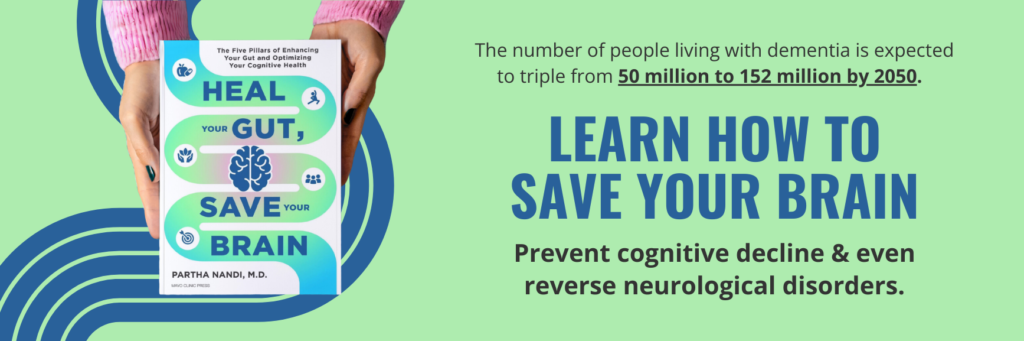
- Understand the Gut-Brain Connection: Your gut produces neurotransmitters, houses much of your immune system, and communicates constantly with your brain—which means gut inflammation quickly becomes brain inflammation. Heal Your Gut, Save Your Brain walks you through the science of this connection and lays out a holistic, practical approach to supporting both systems together.
- Eat for Anti-Inflammatory Impact: Colorful vegetables, berries, olive oil, fatty fish, nuts, seeds, and herbs and spices all deliver compounds that quiet chronic inflammation—one of the biggest drivers of cognitive decline. The Mediterranean and MIND diet patterns have some of the strongest evidence for brain protection over time.
- Challenge Your Brain with Novelty: Neurons that fire together wire together, and novelty is what keeps them firing in new patterns. Learn a language, pick up an instrument, try a hobby that intimidates you, take a different route home. Autopilot is your brain’s enemy in the long run.
- Manage Chronic Stress: Prolonged stress raises cortisol, which is directly toxic to the hippocampus—the brain region most responsible for memory. Daily practices like breathwork, meditation, prayer, or time in nature give your nervous system a chance to reset instead of running on constant alarm.
- Invest in Meaningful Social Connection: Loneliness and social isolation are now recognized as significant risk factors for cognitive decline, on par with several traditional medical ones. Regular, meaningful interaction with others—family, friends, faith communities, hobby groups—actively protects the brain.
- Watch Your Cardiovascular Health: What’s good for the heart is good for the brain. Blood pressure, blood sugar, cholesterol, and weight all influence how well blood flows to your brain—and vascular health is one of the biggest modifiable risk factors for dementia. Stay on top of your numbers.
- Limit Alcohol and Avoid Smoking: Both accelerate brain aging and increase dementia risk in dose-dependent ways. Cutting back—even modestly—delivers measurable long-term benefits.

Sources:
- Texas A&M University. (2026, April 14). Scientists reverse brain aging with a nasal spray. https://stories.tamu.edu/news/2026/04/14/scientists-reverse-brain-aging-with-a-nasal-spray/
- IFLScience. (2026). Nasal spray could reverse brain aging by lowering inflammation and re-energizing brain cells. https://www.iflscience.com/nasal-spray-could-reverse-brain-aging-by-lowering-inflammation-and-re-energizing-brain-cells-83226
- Discover Magazine. (2026). A future nasal spray could help reverse brain aging and restore memory, at least in early tests. https://www.discovermagazine.com/a-future-nasal-spray-could-help-reverse-brain-aging-and-restore-memory-at-least-in-early-tests-48975