


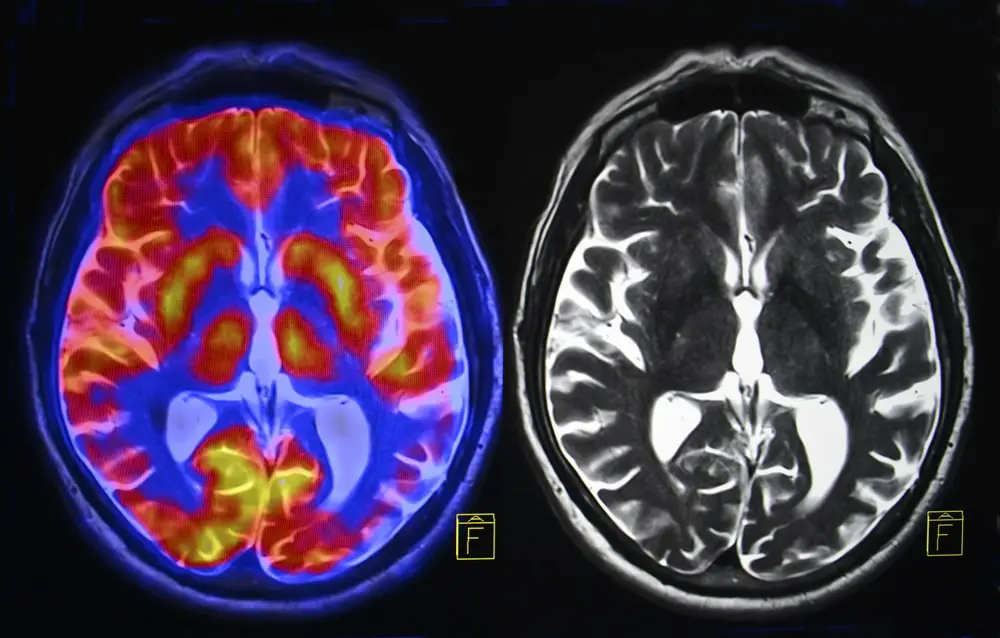
Brain cells lost to Alzheimer’s and Parkinson’s disease might soon be replaceable. Japanese researchers created enhanced vitamin K compounds that regenerate neurons three times better than natural vitamin K. Unlike current medications that only mask symptoms, these new compounds actually trigger the brain to grow fresh neurons. Scientists at Shibaura Institute of Technology combined vitamin K with retinoic acid to create molecules that cross into the brain and activate regeneration. Early tests in mice showed the compounds penetrate the blood-brain barrier and convert to active forms that stimulate neuron growth. Neurodegenerative diseases rob millions of people of their memories, movement, and independence each year. Current treatments offer no cure and provide limited relief.
Why Current Treatments Fall Short
Medications available today for Alzheimer’s, Parkinson’s, and Huntington’s disease ease symptoms but cannot stop or reverse brain damage. As neurons die, patients lose memory, cognition, and motor control. Quality of life declines until round-the-clock care becomes necessary. Families watch their loved ones fade while spending enormous amounts on caregiving and medical expenses.
Natural vitamin K plays roles in blood clotting and bone health that doctors have known about for decades. Recent research revealed that vitamin K also protects neurons and helps with brain cell development. However, naturally active forms like menaquinone-4 (MK-4) lack sufficient potency for regenerative medicine applications. Scientists needed something stronger to replenish neurons lost to disease.

How Scientists Created Better Vitamin K
Associate Professor Yoshihisa Hirota and Professor Yoshitomo Suhara led a team that synthesized 12 new vitamin K hybrid molecules. Each compound combined vitamin K with different structural elements from retinoic acid, an active form of vitamin A known to promote neuronal differentiation. Some versions included carboxylic acid groups while others featured methyl ester side chains.
Vitamin K works through the steroid and xenobiotic receptor (SXR) while retinoic acid acts through the retinoic acid receptor (RAR). Both receptors control gene transcription that affects cell behavior. Researchers wanted compounds that preserved both activities. Tests on mouse neural progenitor cells confirmed that the hybrid molecules maintained biological functions from both parent compounds.
One compound stood out from the rest. Scientists dubbed it Novel VK because it possessed both the conjugated structure of retinoic acid and a methyl ester side chain. Novel VK demonstrated threefold higher neuronal differentiation activity compared with controls and significantly outperformed natural vitamin K compounds.
How Enhanced Vitamin K Triggers Neuron Growth
Researchers wanted to understand exactly how vitamin K promotes brain cell regeneration. They compared gene expression in neural stem cells treated with MK-4 (which promotes neuronal differentiation) against cells treated with compounds that suppress differentiation. Analysis of 48,441 genes revealed that vitamin K alters the expression of 3,780 genes. Among these, 273 genes relate to neuronal differentiation, and 110 genes connect to MAPK signaling pathways.
Deeper investigation identified metabotropic glutamate receptors (mGluRs) as key players in the mechanism. Specifically, mGluR1 mediates vitamin K-induced neuronal differentiation through downstream changes to gene expression and epigenetic regulation. Previous research showed that mGluR1 affects synaptic transmission, and mice lacking this receptor develop motor dysfunction and synaptic problems characteristic of neurodegenerative diseases.
Molecular docking studies confirmed Novel VK binds to mGluR1 with stronger affinity than natural vitamin K. When Novel VK attaches to mGluR1, it triggers a cascade of cellular events. Protein kinase C activates gene expression changes. Histone acetylation increases, which affects how DNA wraps around histone proteins and controls which genes turn on or off. All these changes push neural progenitor cells to differentiate into mature, functional neurons.
Testing in Cells and Animals
Scientists first tested Novel VK uptake and conversion in human bone cells grown in laboratory dishes. Cells absorbed Novel VK in a concentration-dependent fashion. More importantly, Novel VK converted to active MK-4 more easily than natural vitamin K. About 10 percent of absorbed compound changed to MK-4, similar to rates seen with natural vitamin K, but achieved more readily.
Pharmacokinetics studies in mice provided encouraging results for real-world applications. Researchers gave Novel VK orally to eight-week-old male mice and tracked its movement through the blood, liver, and brain tissue at multiple time points. Novel VK levels in plasma peaked four hours after administration and remained detectable at 12 hours. Liver concentrations also peaked at four hours but cleared faster than plasma.
Brain results proved most exciting. Novel VK concentrations in the cerebrum peaked at six hours and stayed significantly higher than control groups until 24 hours. MK-4 levels in the brain increased steadily from the moment of administration, reaching maximum concentration at 24 hours. Final brain MK-4 levels exceeded peak Novel VK concentrations by more than double.
Crossing the Blood-Brain Barrier
Getting medications into the brain poses enormous challenges. Blood vessels in the brain have tight junctions that block most molecules from entering. Compounds with topological polar surface area greater than 140 Ų generally show poor membrane permeability. Novel VK measures only 60.44 Ų, giving it excellent potential for brain entry.
High fat solubility further improves Novel VK’s ability to penetrate brain tissue. Mice studies confirmed Novel VK crosses the blood-brain barrier efficiently and achieves higher brain concentrations than natural vitamin K. Peak brain levels reached 8.17 pmol/g compared to approximately 4.5 pmol/g for natural vitamin K.
Scientists believe Novel VK follows a two-stage entry process. Early absorption through lymphatic vessels allows direct migration to the brain during the first six hours. Later, Novel VK breaks down to menadione in the small intestine, circulates through the blood, and converts to MK-4 via the enzyme UBIAD1 in brain tissue. Within 24 hours, both Novel VK and its breakdown products have transformed into active MK-4 that can stimulate neuron regeneration.

What Results Mean for Patients
Dr. Hirota described the research as potentially groundbreaking for treating neurodegenerative diseases. A vitamin K-derived drug that slows Alzheimer’s progression or improves symptoms could transform patient and family quality of life. Reducing the societal burden of healthcare costs and long-term caregiving would benefit entire communities struggling with aging populations.
Neuron loss defines Alzheimer’s, Parkinson’s, and related conditions. If Novel VK or similar compounds can replenish lost neurons and restore brain function, they would represent true disease-modifying therapies rather than symptom management. Patients might regain cognitive abilities, memory, and motor control instead of watching an inevitable decline.
Current dementia care costs families and healthcare systems billions annually. Patients require increasing levels of assistance as the disease progresses. Many eventually need residential care facilities. Medications that reverse or prevent neuron loss could delay or eliminate these needs, keeping people independent and productive longer.
Challenges Before Clinical Use
Laboratory and animal studies show promise, but human trials remain years away. Researchers must confirm safety in larger animal studies before seeking approval for human testing. Proper dosing, potential side effects, and long-term impacts need thorough evaluation. Novel VK converts partially to MK-4, but scientists must determine whether the parent compound, its metabolite, or both provide therapeutic benefits.
Drug development typically takes a decade or more from discovery to market approval. Even fast-tracked medications face rigorous testing requirements. Patients desperate for better treatments will need patience while science advances through necessary safety checks. However, the mechanistic understanding researchers achieved provides clear targets for further optimization.
Scientists can now design additional compounds that bind even more strongly to mGluR1 while maintaining the ability to cross into brain tissue. Each iteration brings the possibility of clinical medications that truly address neurodegeneration rather than merely masking its effects.
Supporting Brain Health Now
While waiting for Novel VK-based medications, people can take steps to protect brain health. Existing research shows vitamin K from dietary sources supports cognitive function. Leafy green vegetables provide vitamin K1, while fermented foods contain vitamin K2. Both forms offer neuroprotective benefits, though at lower potency than the enhanced compounds.
Reducing inflammation protects brain cells from damage that accelerates cognitive decline. Regular exercise improves blood flow to the brain and supports neuron survival. Mental stimulation through learning, social interaction, and challenging activities helps maintain cognitive reserve. Managing cardiovascular risk factors like high blood pressure and cholesterol protects the brain’s blood vessels that deliver oxygen and nutrients.
Sleep quality affects brain health profoundly. During deep sleep, the brain clears metabolic waste products that accumulate during waking hours. Chronic sleep deprivation allows toxic proteins to build up, potentially contributing to neurodegenerative processes. Stress management also matters because chronic stress hormones damage hippocampal neurons involved in memory formation.
My Personal RX on Protecting Your Brain From Degeneration
Brain health determines quality of life as we age, and protecting neurons deserves as much attention as protecting your heart. Research on vitamin K analogues shows us that regenerating lost brain cells might become possible within our lifetimes. Until those therapies arrive, we can take action today to preserve the neurons we have. Nobody can prevent all age-related changes, but you can slow the process and maintain function longer. Brain health connects directly to gut health through the gut-brain axis. Chronic gut inflammation sends inflammatory signals throughout the body, including the brain. Supporting a healthy microbiome reduces systemic inflammation that damages neurons. Your brain depends on you making choices today that protect it for tomorrow.
- Nourish Your Gut-Brain Connection: Brain health begins in your digestive system. MindBiotic combines probiotics, prebiotics, and Ashwagandha KSM 66 to reduce inflammation and support the gut-brain axis, which directly affects cognitive function and neuroprotection.
- Eat Brain-Protective Foods Daily: Build meals around leafy greens, berries, fatty fish, nuts, and whole grains. Mindful Meals cookbook provides 100+ doctor-approved recipes rich in antioxidants and anti-inflammatory compounds that protect neurons from oxidative damage.
- Move Your Body Every Single Day: Exercise increases blood flow to the brain and stimulates growth factors that support neuron survival. Aim for 30 minutes of movement that raises your heart rate at least five days per week.
- Prioritize Seven to Nine Hours of Sleep: Deep sleep allows your brain to clear toxic proteins that accumulate during waking hours. Poor sleep accelerates cognitive decline and increases neurodegenerative disease risk.
- Challenge Your Mind Constantly: Learning new skills, reading complex material, and solving puzzles build cognitive reserve that protects against decline. Mental challenges create new neural connections that compensate for age-related losses.
- Manage Stress Through Daily Practice: Chronic stress hormones damage hippocampal neurons involved in memory. Practice meditation, deep breathing, or activities that bring joy to lower cortisol levels.
- Control Blood Sugar and Insulin: High blood sugar damages blood vessels in the brain and increases inflammation. Eat balanced meals with protein, healthy fats, and fiber to stabilize glucose levels.
- Maintain Strong Social Connections: Loneliness and isolation increase dementia risk while social engagement protects cognitive function. Invest time in relationships that bring meaning and connection.
Source:
Hirota, Y., Sato, T., Watanabe, R., Takeda, K., Sano, S., Asano, S., Shibahashi, Y., Yasuda, Y., Takagi, Y., Yamashita, Y., YuXin, W., Arakawa, M., Maitani, Y., Lawai, V., Nakagawa, K., Furukawa, N., Takeuchi, A., Tode, C., Kamao, M., . . . Suhara, Y. (2025). A new class of vitamin K analogues containing the side chain of retinoic acid have enhanced activity for inducing neuronal differentiation. ACS Chemical Neuroscience. https://doi.org/10.1021/acschemneuro.5c00111







 Subscribe to Ask Dr. Nandi YouTube Channel