



You probably know that spending time with certain people leaves you feeling drained. Others leave you feeling calm, grounded, and somehow lighter. Most of us chalk that up to personality or chemistry. But science says something much deeper is going on. Your nervous system is not a sealed-off machine running on its own. It responds, adapts, and physically changes based on who surrounds you. And the effects go far beyond a temporary mood shift. Your brain is quietly absorbing the emotional states of the people closest to you, and over time, it starts treating those states as its new normal. What you are about to read may change how you think about every relationship in your life.
Your Nervous System Was Never Meant to Work Alone
Humans are not wired for emotional independence. As much as modern culture celebrates self-sufficiency, your biology tells a different story. Your autonomic nervous system, the part of your body that controls heart rate, breathing, digestion, and stress responses, does not operate in a vacuum. It constantly communicates with the nervous systems of the people around you.
Scientists call this process co-regulation. When you interact with another person, your heart rate, breathing patterns, and stress hormones begin to sync with theirs. If the person beside you is calm and relaxed, your body starts moving toward that same state. If they are anxious, hostile, or unpredictable, your body picks up on that too and shifts into a defensive posture.
Co-regulation is not a choice or a conscious decision. It happens below the level of awareness, driven by ancient biological wiring that evolved to keep social animals safe and connected within groups.

Limbic Resonance: A Silent Language Your Brain Already Speaks
At the center of co-regulation sits a phenomenon called limbic resonance. Your limbic system, the emotional core of your brain, has the ability to sense and mirror the emotional states of people near you, even when no words are spoken.
Think about the last time you walked into a room where two people had just been arguing. Nobody said a word to you, but you could feel the tension. Or recall sitting next to a friend who radiates warmth and ease. Without any conversation, your shoulders dropped, and your breathing slowed.
That is limbic resonance at work. It is the reason a baby calms down when held against a parent’s chest. It is why a good therapist can help a client feel safe before any technique or exercise begins. And it is why spending an evening with a trusted friend can undo hours of built-up stress.
All mammals share this capacity. You have probably noticed how petting a dog or cat after a rough day brings a wave of calm. That cross-species connection runs through the same limbic pathways.
Calm People Calm Your Biology
When you spend consistent time with people who are emotionally regulated, your body reaps measurable benefits. Being around calm, supportive individuals lowers your cortisol levels (the hormone your body releases during stress) and improves your vagal tone.
Vagal tone refers to the activity of your vagus nerve, a long nerve running from your brainstem to your gut that controls your body’s ability to recover from stress. High vagal tone means your body can shift out of a stress response quickly and return to a resting state. Low vagal tone means your system stays stuck in alarm mode longer than it should.
People with strong, supportive relationships tend to have better vagal tone. Their bodies bounce back faster after stressful events. Their blood pressure stays lower. Their immune systems function better. And their emotional baseline, the mood they return to when nothing particular is happening, tends to sit closer to calm than to anxious.
None of that happens by accident. It happens because their nervous systems are being regulated, day after day, by the steady presence of safe, predictable people.
Toxic Relationships Train Your Brain to Stay on High Alert
Now flip the picture. When you spend prolonged time with people who are critical, hostile, chaotic, or emotionally volatile, your nervous system adapts to that environment instead.
Your body enters a persistent state of fight-or-flight. Cortisol stays elevated. Your heart rate remains high. Your muscles stay tense. Your brain begins treating hypervigilance as the default setting because, in an unpredictable environment, staying on guard feels like the safest option.
Over time, your brain rewires itself around that state. Neuroplasticity, your brain’s ability to change based on repeated experiences, works in both directions. Just as positive relationships build calm neural pathways, toxic ones build anxious ones. You do not just “catch” someone’s bad mood for an afternoon. You internalize their physiological state through repeated exposure, and your brain starts running that program even when the stressful person is not around.
That is why people who leave toxic relationships or high-conflict households often describe feeling anxious “for no reason” long after the situation has ended. Their nervous system learned a pattern, and unlearning it takes time and intentional effort.
You Do Not Just Pick Up Moods. You Absorb Patterns.
Most people understand emotional contagion on a surface level. You smile when someone smiles at you. You feel tense when your coworker is stressed. But co-regulation goes deeper than mood mirroring.
What actually happens is a two-step biological process. First, your brain unconsciously mirrors the emotional signals of the person near you. Second, your body generates a physiological response to match. Your heart rate adjusts. Your hormones shift. Your breathing changes. And if that pattern repeats often enough, your brain treats it as the new baseline.
Imagine soaking a sponge in water every day. Eventually, the sponge does not need to be placed in water to be damp. It just stays that way. Your nervous system works the same way with emotional environments. Repeated exposure to certain emotional states trains your brain to default to those states on its own.
Co-Regulation Starts in Childhood and Shapes You for Life
Children depend entirely on adults for co-regulation. A baby cannot calm itself down. It needs a caregiver to hold it, speak softly, and model a calm nervous system. As children grow, they learn emotional skills through this process: how to recognize feelings, how to self-soothe, how to pause before reacting.
Lauren Marchette, a child and family psychologist and lecturer at Harvard Medical School, describes co-regulation as a supportive and interactive process where caregivers help young people learn better ways to regulate their emotions during life’s inevitable upsets. She points out that before a parent can help a child calm down, they need to regulate their own emotions first.
Children who grow up with consistent co-regulation develop stronger self-regulation skills. They handle stress better, resist impulsive decisions, solve problems with more flexibility, and build healthier relationships as adults. Research suggests these children also tend to have higher incomes and lower rates of substance use and violence later in life.
Children who grow up without reliable co-regulation, whether due to neglect, household chaos, or a caregiver’s own unresolved emotional patterns, often enter adulthood with a nervous system calibrated for threat rather than safety.
Your Social Circle Is a Biological Choice
Choosing who you spend time with is not just a lifestyle preference. It is a biological decision that directly affects your stress hormones, your heart health, your immune function, and your emotional baseline.
Spending time with predictable, trustworthy, emotionally grounded people is one of the most powerful things you can do for your mental and physical health. Setting firm boundaries with people who drain your energy or keep you in a state of emotional chaos is not selfish. It is a form of self-preservation rooted in how your body actually works.
Relationship quality affects health more than almost any other lifestyle factor. Toxic, unstable relationships can make you physically sick over time. Safe, nurturing ones can help your body heal in ways that no supplement or exercise routine can replicate on its own. You get to choose which nervous systems you sync with. Make that choice count.
My Personal RX on Protecting Your Nervous System Through Better Relationships
Your nervous system absorbs the emotional states of the people closest to you, for better or worse. While you cannot control everyone around you, you can take active steps to protect and strengthen your own stress response. I encourage my patients to think of nervous system health as a daily practice, not a one-time fix. A regulated body handles life’s challenges with more ease, and it starts with what you feed your gut, how you sleep, and who you allow into your inner circle. Here is what I recommend:
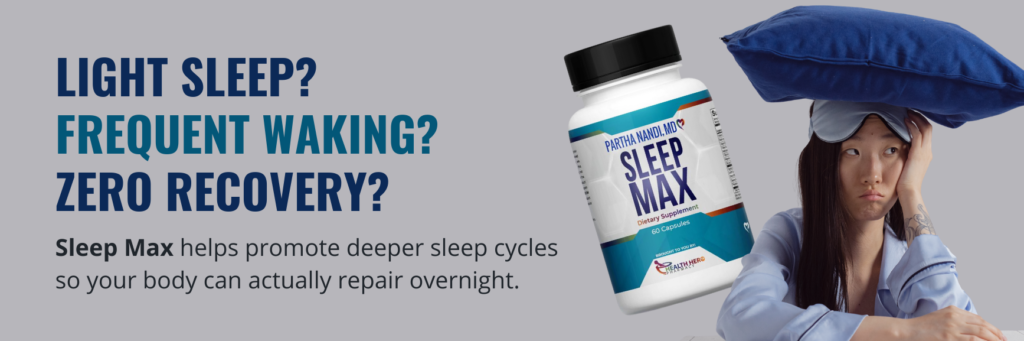
- Get Restorative Sleep Every Night: Sleep is when your nervous system repairs itself. Sleep Max combines magnesium, GABA, 5-HTP, and taurine to calm your mind, support neurotransmitter balance, and promote deep REM sleep so you wake up with a regulated, resilient nervous system.
- Fill Your Nutrient Gaps After 40: Your brain needs specific nutrients to maintain emotional balance and stress resilience. Download my free guide, The 7 Supplements You Can’t Live Without, to learn which supplements matter most, which “healthy” foods may be fooling you, and how to tell quality products from junk.
- Audit Your Inner Circle: Write down the five people you spend the most time with. Ask yourself honestly: does each person leave you feeling calm and safe, or drained and on edge? Reduce time with people who keep your nervous system in overdrive.
- Practice Deep Breathing Before Reacting: When you feel your stress response rising, pause and take five slow breaths. Exhale longer than you inhale. Even 60 seconds of intentional breathing activates your vagus nerve and shifts your body out of fight-or-flight mode.
- Spend Time with a Pet: Animals are powerful co-regulators. Sitting with a dog or a cat for just 15 minutes lowers cortisol and blood pressure. If you have a pet, make that quiet time a daily ritual.
- Model Calm for Your Children: Kids learn emotional regulation by watching you. When you pause, breathe, and respond rather than react, you are building their nervous system alongside your own.
- Set Boundaries Without Guilt: Saying no to draining social situations is not selfish. It is a biological need. Protect your energy by limiting exposure to people and environments that keep you stuck in a stress state.
- Seek Professional Support When Needed: If you feel stuck in a state of constant anxiety or hypervigilance, a therapist trained in somatic or nervous system work can help you reset patterns that self-care alone cannot reach.
Sources:
Bornstein, M. H., & Esposito, G. (2023). Coregulation: a multilevel approach via biology and behavior. Children, 10(8), 1323. https://doi.org/10.3390/children10081323
Silkenbeumer, J., Schiller, E., Holodynski, M., & Kärtner, J. (2016). The Role of Co-Regulation for the development of social-emotional competence. University Library Heidelberg, 2(2), 17–32. https://doi.org/10.11588/josar.2016.2.34351








 Subscribe to Ask Dr. Nandi YouTube Channel