


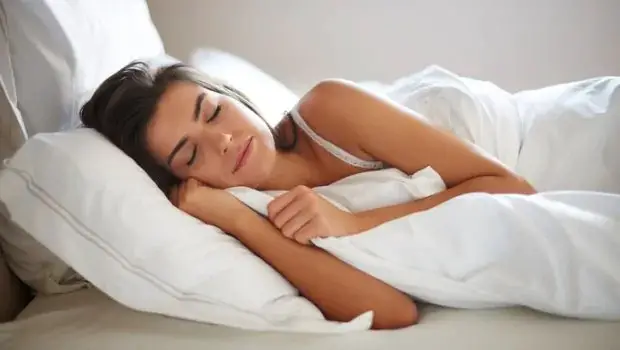
Something odd appears in a 1699 English court record. Nine-year-old Jane Rowth testified that she and her mother had just awoken from their “first sleep” when men arrived at their window around 11 PM. Her mother left with them and never returned. Historians glossed over Jane’s testimony for centuries until researcher Roger Ekirch noticed those two words buried in dusty archives. First sleep implies a second sleep exists. Searching through thousands of medieval documents, diaries, and literature, Ekirch found hundreds of casual references to people waking naturally around midnight, staying awake for an hour or two, then returning to bed until dawn. Europeans called it “the watch.” Families tended fires, prayed, had intimate conversations, or simply lay quietly contemplating their dreams. Nobody thought this pattern strange or worth explaining because everyone slept that way. Modern sleep science confirms something remarkable happened when electric lights invaded our nights.
When Midnight Was the Middle of Sleep
Court depositions from medieval England provide windows into ordinary sleeping habits because witnesses often mentioned their sleep patterns while describing crimes. Luke Atkinson’s wife testified that her husband frequently left their bed during his midnight waking period to commit burglaries. Jon Cokburne, a weaver, mentioned his first and second sleeps as casually as discussing breakfast. Nobody explained what the first sleep meant because everyone already knew.
Literature from ancient times through the 1800s contains similar references. Homer’s Odyssey from the 8th century BC mentions characters waking between sleep periods. Geoffrey Chaucer’s Canterbury Tales describes pilgrims settling into their first sleep. William Baldwin’s 1561 satirical novel Beware the Cat centers on a man learning to understand cats, one of whom gets tried for promiscuity between sleep periods. Even ballads sang about it: “And at the wakening of your first sleepe, You shall have a hot drink made, And at the wakening of your next sleepe, Your sorrows will have a slake.”
Biphasic sleep patterns appeared across continents. French speakers called it “premier somme.” Italians said “primo sonno.” Colonial accounts from 1555 Brazil described the indigenous Tupinambá people eating dinner after their first sleep. Records from 19th 19th-century Oman noted locals retiring before 10 PM for their initial rest period. Evidence spans from ancient Greece through the early 20th century, suggesting this pattern dominated human sleeping for thousands of years before vanishing almost completely.

What People Did During the Watch
Waking around midnight was not considered insomnia or a sleep problem. People expected it. Under weak moonlight and oil lamps, families tended to practical matters first. Adding wood to fires kept homes warm through cold nights. Checking on livestock prevented losses. Peasants patched clothing or combed wool for spinning. One industrious servant even brewed beer for her employer between midnight and 2 AM.
Religious obligations filled the watch for many Christians. Specific prayers existed for these exact hours. One father praised midnight wakefulness as the most “profitable” time when worldly distractions faded and “no one will look for you except for God.” Monks had formal requirements to rise for midnight prayers, a practice that filtered down from monasteries to common households.
Philosophers used quiet darkness for contemplation. A London tradesman invented a “nocturnal remembrancer” in the late 1700s, essentially a notepad with a horizontal writing guide that allowed people to record their midnight insights without seeing the paper. Creative thoughts flowed during these calm hours when digestion had finished, and physical exhaustion from daytime labor had eased.
Social connection thrived during the watch. Communal sleeping meant most people shared beds with family members, servants, or even strangers when traveling. Medieval etiquette included strict rules about sleeping positions and avoiding excessive movement. But during midnight wakefulness, bedfellows could chat with informal ease impossible during busy days. Married couples took advantage of this interval for intimacy, considering it an excellent time for conception after the first sleep had relieved their exhaustion from manual labor.
How Electric Light Changed Everything
Gas lighting arrived in London during the 1700s, followed by electric illumination toward the end of the century. Artificial light allowed people to stay awake longer after sunset. Instead of going to bed at 9 or 10 PM, households began staying up until 11 PM or later. Morning wake times remained constant because work schedules demanded it, so total sleep time got compressed.
Compressed sleep became deeper sleep out of necessity. When people finally crawled into bed after spending hours under bright lights, their bodies crashed hard. First sleep lengthened while the second sleep shortened and eventually disappeared. Roger Ekirch traced this transformation decade by decade through the 1800s using historical records showing gradually changing sleep onset times.
Electric lighting did more than just keep people awake longer. Bright light at night suppresses melatonin production and shifts circadian rhythms later. Our bodies interpret evening light exposure as a signal that daytime continues, delaying the biological processes that prepare us for sleep. Room lighting before bedtime pushes sleep onset later, even without conscious decisions to stay awake.
Factory schedules during the Industrial Revolution encouraged single sleep blocks. Workers needed to show up at specific morning times and couldn’t accommodate flexible biphasic sleep patterns. By the early 20th century, eight uninterrupted hours became the cultural ideal, replacing centuries-old rhythms of segmented rest.
Hunter-Gatherers Still Sleep Differently Today
Biphasic sleep never completely vanished. Researchers studying three preindustrial societies without electricity found remarkably similar patterns across continents. Hadza hunter-gatherers in Tanzania, San people in Namibia, and Tsimané in Bolivia all sleep in ways that challenge assumptions about “natural” human rest.
Sleep duration in these groups ranged from 5.7 to 7.1 hours, similar to or less than industrial populations, contradicting claims that artificial lighting dramatically reduced human sleep time. However, sleep timing differed dramatically from modern patterns. Nobody went to bed at sunset. Sleep onset occurred on average 3.3 hours after dark, and awakening usually happened before sunrise.
Napping was surprisingly rare. Automated analysis of activity monitors found that afternoon naps occurred on only 7% of winter days and 22% of summer days among San participants. Many of these potential naps might have been quiet rest rather than actual sleep. When naps did occur, they averaged just 32 minutes. Daily siestas were not the human default these studies suggested.
Seasonal variation appeared strong in groups far from the equator. San participants slept 53 minutes longer in winter compared to summer. Tsimané slept 56 minutes longer during the winter months. Modern industrial societies show minimal seasonal sleep changes despite dramatic variations in daylight hours, likely because temperature control and artificial lighting buffer us from environmental cues.
Extended nocturnal awakenings, like those described in medieval European records, were absent in these populations. Researchers found no evidence of people regularly waking for hours in the middle of the night. Sleep occurred in one continuous block during the coldest part of the night, contradicting the notion that biphasic sleep with midnight waking represented our species’ evolutionary default.
Temperature Controls Sleep More Than We Thought
Sleep timing in all three preindustrial groups synchronized with temperature drops rather than darkness. Sleep onset consistently occurred during periods of falling ambient temperature, and awakening happened near the nighttime temperature nadir. During winter, San participants showed vasoconstriction at wake onset, indicating their bodies needed to generate heat for morning activity.
Sleeping during the coldest part of the night makes metabolic sense. Remaining active when environmental temperatures hit their lowest point would waste enormous energy maintaining body heat. Core temperature naturally declines during sleep, reducing the differential between body and environment. Less differential means less heat loss and lower energy expenditure.
Modern temperature control eliminates these natural cues. Insulated buildings, heating systems, and air conditioning flatten the temperature variation our ancestors experienced. We create stable thermal environments year-round, losing the falling temperature signal that historically triggered sleep onset. Some researchers believe this contributes to insomnia because our bodies must actively shed heat at bedtime rather than passively responding to cooler surroundings.
Summer and winter sleep differences in San participants revealed temperature’s dominance over light. Despite similar day lengths, San people awakened much later in summer than Tsimané participants, likely because morning temperatures stayed cooler in Namibia. Summer temperature nadirs occurred after sunrise in San territory, shifting wake times later even as daylight arrived.
The Siesta Connection Nobody Expected
Mediterranean cultures maintain afternoon rest periods called siestas, typically lasting 60 to 90 minutes. Spain and Italy famously embrace this tradition, with many businesses closing during peak afternoon heat. Siestas represent a surviving form of biphasic sleep adapted to warm climates.
Research on napping reveals clear cognitive benefits. Short 20-minute naps reduce sleepiness and improve alertness almost immediately. Longer 30-plus-minute naps produce cognitive enhancements lasting several hours, though people experience brief grogginess upon waking. Regular nappers enjoy these benefits more than occasional nappers.
Afternoon drowsiness appears universal across cultures. Blood pressure drops, alertness declines, and many people feel naturally sleepy regardless of meal size. Some researchers suggest this midday slump echoes our polyphasic infant sleep patterns when we rested multiple times daily.
Light exposure patterns in preindustrial societies showed surprising consistency. All three studied groups received maximum light in morning hours, then deliberately sought shade at midday despite peak sunlight. Activity monitors showed dramatic drops in measured light levels around noon, even as ambient brightness doubled. People actively avoided the midday sun across different continents and climates.
Morning light exposure carries special importance for circadian rhythm regulation. Blue wavelengths present in morning sunlight most effectively stimulate cortisol production and suppress melatonin. By seeking morning sun and afternoon shade, preindustrial people maintained strong circadian signals that reinforced healthy sleep timing.

Should You Try Sleeping in Two Shifts
Medieval Europeans may have adopted biphasic sleep with midnight waking as an adaptation to long winter nights at higher latitudes. When darkness lasted 16 hours in places like England or Germany, splitting that extended period into two sleep segments with an active interval made sense. Equatorial populations never developed this pattern because their night length varied minimally across seasons.
Laboratory experiments support this theory. When researchers placed modern subjects in darkness for extended periods simulating long winter nights, participants naturally developed biphasic sleep with midnight waking intervals. A 1995 study by Thomas Wehr restricted 15 men to 10-hour days and 14-hour nights without artificial light. After four weeks, all participants had shifted from single-block sleep to two separate sleep periods separated by one to three hours of quiet wakefulness. Their melatonin rhythms had adjusted, confirming biological rather than behavioral changes.
Modern single-block sleep may therefore represent a return to equatorial sleep patterns enabled by electric lighting and temperature control, rather than a pathological departure from human nature. Medieval European biphasic sleep was likely an adaptation to environmental conditions rather than our species’ evolutionary default.
Insomnia complaints are surprisingly rare in preindustrial societies. When researchers asked Tsimané and San participants about sleep problems, neither group had words for insomnia in their languages. After researchers explained the concept, only 5% reported occasional difficulty falling asleep, and 9% occasionally had trouble staying asleep. Less than one-third of those experiencing problems said they occurred regularly. Industrial societies report chronic insomnia rates of 10 to 30%, suggesting modern sleeping environments create problems absent under natural conditions.
My Personal RX on Restoring Natural Sleep Patterns
Your body evolved to respond to temperature and light cues that modern environments suppress. Flat indoor temperatures, bright evening lights, and irregular schedules confuse the biological systems that should prepare you for sleep effortlessly. Preindustrial people experienced falling temperatures as they settled for the night, reinforcing natural sleep drive without conscious effort. Bright evening light delays melatonin and shifts your clock later, creating a mismatch between desired sleep time and biological readiness. You cannot perfectly replicate preindustrial conditions, but you can borrow principles that supported healthy sleep for thousands of years before electricity disrupted ancient patterns.
- Lower Bedroom Temperature at Night: Set thermostats to drop 2 to 4 degrees after dinner, mimicking natural evening cooling. MindBiotic supports healthy stress responses through gut-brain axis optimization, helping your body adapt to temperature changes without anxiety disrupting sleep onset.
- Get Morning Sunlight Within One Hour of Waking: Step outside for 10 to 15 minutes even on cloudy days. Morning light exposure provides the strongest circadian signal, especially important during winter months when sunrise occurs late, and daylight stays weak.
- Dim Lights Starting Two Hours Before Bed: Switch to lamps with warm bulbs, turn off overhead lighting, and enable night mode on all screens. Gradual light reduction helps melatonin rise naturally rather than suppressing it until the moment you try sleeping.
- Allow Brief Awakenings Without Anxiety: If you wake at 3 AM, recognize this as potentially normal rather than catastrophic. Cover clocks to avoid time anxiety. Stay in bed quietly or get up for calm activity in dim light if still awake after 20 minutes.
- Consider Strategic Afternoon Naps if Sleep Deprived: A 20-minute nap between 1 PM and 3 PM can restore alertness without disrupting nighttime sleep. Avoid napping after 3 PM or sleeping longer than 30 minutes during the day.
- Cook and Eat Mindfully Prepared Evening Meals: Mindful Meals cookbook offers gut-healing recipes that support healthy digestion and stable blood sugar overnight. Heavy late meals or blood sugar crashes can fragment sleep even when temperature and light cues align.
- Exercise Outdoors During Daylight Hours: Physical activity combined with natural light exposure strengthens circadian signals. Aim for at least 30 minutes daily, preferably in the morning or early afternoon rather than late evening.
Source:
Yetish, G., Kaplan, H., Gurven, M., Wood, B., Pontzer, H., Manger, P. R., Wilson, C., McGregor, R., & Siegel, J. M. (2015). Natural sleep and its seasonal variations in three pre-industrial societies. Current Biology, 25(21), 2862–2868. https://doi.org/10.1016/j.cub.2015.09.046