


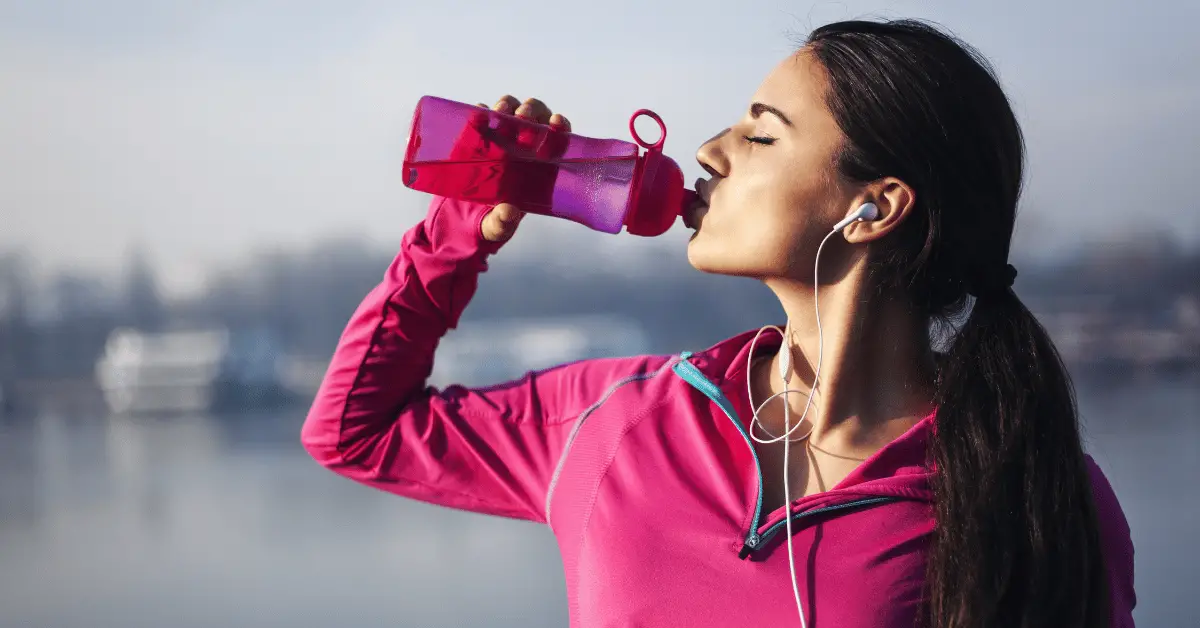
We’ve all heard the folk wisdom that eight cups of water a day is the magic amount to keep your body going strong. However, just like the human body has different caloric needs, depending on a variety of factors, each body needs a different amount of water to stay functional. Below, we’ll explore hydration and the human body, looking at what the right amount of water is for you.
Why Is It Important To Drink Enough Water?
Most of us know that water is good for us, but many of us may not know exactly why. It can be hard to prioritize your water intake if you don’t understand why it’s important.
Keeping Your Body Functioning
Lisa Drayer, a registered dietitian, says that “water regulates our body temperature, keeps our joints lubricated, helps prevent infections and delivers nutrients to our cells. Additionally, our kidneys and liver work hard to get rid of toxins in our bodies, and they depend on water to do their job.” (1)
Staying Alive
Former Minnesota Vikings offensive lineman Korey Stringer died of heatstroke in 2001. Since then, his wife has partnered with the University of Connecticut to create the Korey Stringer Institute, which studies how to keep athletes healthy. Proper hydration is one of the biggest keys to preventing heatstroke.
In fact, since 60% of the human body is made of water, water is more important to the body than food – while you, of course, need both, you will die much faster from dehydration than starvation. (1, 2)
Mental Health
CEO of the Korey Stringer Institute, Douglas Casa says, “We did a study on people who were mildly dehydrated, which can happen within just 30 minutes of exercise, and we found mood was compromised in both men and women.”
But it’s more than just a minor mood drop. “When you’re well-hydrated, your sleep quality is better, your cognition is better, you function better, your mood is better, the list goes on,” says Casa. When you maintain adequate hydration, you’re starting every day mentally ahead, giving you an emotional boost for your day. (2)

For more health and nutrition tips, don’t forget to check out Dr. Partha Nandi’s newsletter!
So How Much Water Should You Drink?
Well, there’s no easy answer, since it depends on a variety of factors, but the U.S. National Academies of Sciences, Engineering, and Medicine recommends a baseline of 15.5 cups (3.7 liters) of fluids a day for men and 11.5 cups (2.7 liters) of fluids a day for women. But since this is just an average, there are several factors to take into account (1,3)
Water and Weight
The University of Missouri shares a formula for calculating your base water level based on weight: weigh yourself in pounds and divide that number by two. That is how many ounces of water you should be aiming for, at a minimum. (3)
Exercise and Water
The more physically active you are, the more water you will lose, as water is expelled through both breath and sweat – both things that happen more frequently during moderate to heavy physical exercise.
The American College of Sports Medicine says that for every 30 minutes that you are working out, you should add 12 oz of water to your base daily intake. (1, 3)
Pregnancy and Water
If you are pregnant, you’ll need to drink more water — after all, you’re growing an entirely new human being, and that requires a fair bit of your body’s resources. Add between 24-32 oz of water to your daily intake when pregnant, and adjust based on how much you weigh. (3)
Environment and Water
Heat and high altitudes make your body pump out its water supplies at much higher rates. It’s important to compensate for that not only by drinking more but also by drinking lots of water before you get into these environments. (3, 4)
What If I Can’t Drink That Much Water?
Whatever number you get using these guidelines may seem like a daunting amount – maybe you struggled to get to eight cups of water, and now you may need to drink twice as much. How are you supposed to keep up?
Well, the first thing to do is think about why you’re having a hard time with your water intake. Professor of nutrition and epidemiology at Harvard T.H Chan School of Public Health thinks that most of us may struggle. “Why don’t Americans like to drink water? Because we are conditioned to expect high levels of sweetness in everything, and that has led to a lot of problems,” he says. “High levels of sugar have adverse metabolic effects, and the amounts we get in beverages today is so huge that it is one of our major health issues.”
One of the things you can do is try to improve the taste of your water, in healthy, natural ways. Try adding slices of cucumber, citrus, or different berries into your glass. (1)

I Still Can’t Drink That Much Water
The good news is that a glass of water isn’t the only way to boost your hydration. Dietitian Lisa Drayer says, “I often remind people that broth-based soup, as well as other beverages including tea, coffee, and milk, count towards your daily fluid intake. Also vegetables including cucumbers, lettuce, celery, and tomatoes, and fruits including watermelon, cantaloupe, and strawberries [count towards your hydration].”
How To Tell If I’m Drinking Enough Water
If your urine is colorless or a pale yellow, you’re probably adequately hydrated. A regular urination schedule, every 2-4 hours, is also a good sign.
In contrast, if your urine is darker in color, you feel thirsty, or you have a headache, you need to step up your water intake. Sometimes, the body signals hunger instead of thirst when you’re dehydrated, so if you feel hungry when you normally wouldn’t, try drinking water as well. (1, 3,4)
My Personal RX on Building a Hydration Habit That Actually Sticks
Improving your hydration doesn’t require expensive equipment, complicated tracking, or willpower gymnastics. It’s about building a few small habits into your day so that drinking water becomes automatic rather than something you have to remember. The tips below are the ones I share most often with patients who want to move hydration from an afterthought to a foundation of how they feel every day.
- Start Your Day with a Glass of Water: Your body loses water overnight through breathing and sweating, so you wake up mildly dehydrated. Drinking a full glass of water before your morning coffee helps rehydrate your system, kick-start your metabolism, and set the tone for a hydration-focused day.
- Keep a Water Bottle in Sight at All Times: Out of sight really does mean out of mind when it comes to hydration. Keep a reusable water bottle on your desk, in your car, and by your bed—wherever you spend time. The simple visual cue is one of the most effective hydration hacks I know.
- Make Your Water More Nutritious with Super Greens: One of the biggest reasons people don’t drink enough water is that plain water feels boring. Super Greens is a powdered supplement that delivers the benefits of full-spectrum superfoods—so when you mix a scoop into your water, you’re turning an ordinary glass into a flavorful, nutrient-dense boost that supports your energy and daily nutrition at the same time.
- Eat Your Water: Roughly 20% of our daily hydration comes from food. Cucumbers, watermelon, celery, lettuce, tomatoes, strawberries, oranges, and broth-based soups all contribute meaningfully to your fluid intake—and come packaged with electrolytes and nutrients that pure water lacks.
- Flavor Water Naturally: If Super Greens isn’t your thing, try infusing your water with cucumber slices, citrus wedges, fresh berries, mint leaves, or a splash of unsweetened coconut water. Small flavor upgrades make it far easier to hit your daily target without reaching for sugary drinks.
- Adopt a Holistic Approach to Wellness: Hydration is one pillar of a much bigger picture. Dr. Partha Nandi’s Protocol For Optimizing Your Health & Wellbeing is my comprehensive guide to living your best life through holistic health—covering the daily habits, mindset shifts, and lifestyle practices that come together to help everything (hydration included) actually stick.
- Use Your Urine as a Daily Check-In: It’s not glamorous, but the color of your urine is one of the most reliable, real-time indicators of your hydration status. Aim for pale yellow throughout the day. Dark yellow or amber means you need to catch up.
- Hydrate Around Exercise, Not Just During: Drink water before you work out, sip throughout, and rehydrate afterward. For workouts over 30 minutes—especially in the heat—consider adding a pinch of sea salt or a natural electrolyte source to help replace what you lose through sweat.
- Watch Out for Hidden Dehydrators: Coffee, alcohol, and high-sodium processed foods can all subtly pull water from your system. You don’t have to give them up, but pair them with extra water to offset their effects.
- Listen to Your Body’s Subtle Signals: Thirst is a late signal—by the time you feel it, you’re already behind. Learn to recognize the earlier cues: a headache, an energy dip, a sudden craving, difficulty focusing. Reaching for water first, before food or caffeine, often resolves what your body was actually asking for.

Sources
- https://www.cnn.com/2017/09/27/health/benefits-of-water-and-fluids/index.html
- https://ksi.uconn.edu/about/korey-stringer-institute/
- https://www.umsystem.edu/totalrewards/wellness/how-to-calculate-how-much-water-you-should-drink
- https://www.mayoclinic.org/healthy-lifestyle/nutrition-and-healthy-eating/in-depth/water/art-20044256