

Brain Health

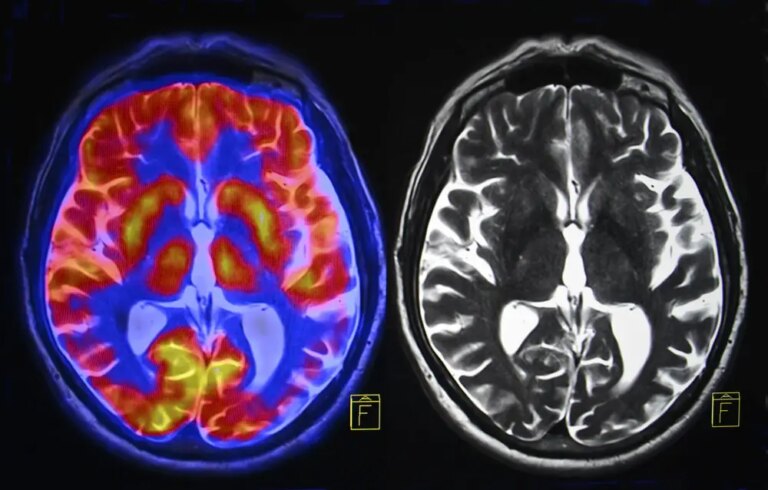
When we talk about maintaining brain health, we are referring to the idea of slowing the process of cognitive decline. The goal of maintaining brain health is to keep your mind sharp well into old age. Maintaining brain health is important because a decline in cognitive function can make life much more difficult. It can be frustrating to have a harder time with things like thinking and remembering. It can be embarrassing to have to ask others for help when you need it. It can be dangerous to make poor decisions because of a decline in cognitive function. There is a lot at stake when it comes to maintaining your brain health, and that is why so many people are interested in the topic.

Nighttime Light Pollution Increases Alzheimer’s Risk in Under-65s
| |

Nighttime Light Pollution Increases Alzheimer’s Risk in Under-65s

Nighttime light flooding American communities may increase Alzheimer’s disease risk, particularly for people under 65, according to research analyzing Medicare data and NASA satellite measurements. Scientists at Rush University Medical Center tracked Alzheimer’s prevalence across US states and counties from 2012 to 2018, comparing disease rates with outdoor light intensity captured by satellites. States with…

Owning a Cat Could Help You Avoid a Heart Attack, According to Science
| | |

Owning a Cat Could Help You Avoid a Heart Attack, According to Science

Scientists have discovered an unexpected guardian angel living in millions of homes across America, silently protecting human hearts in ways that would surprise even the most devoted pet lovers. While medical researchers typically focus on diet, exercise, and medications for cardiovascular protection, groundbreaking findings suggest something far simpler might be providing life-saving benefits.  A decade-long…

The Brain’s Hidden Pulse: How It Could Help Detect Alzheimer’s Earlier
| |

The Brain’s Hidden Pulse: How It Could Help Detect Alzheimer’s Earlier

Imagine if every heartbeat could tell a story about your brain’s future. Researchers at the Mark and Mary Stevens Neuroimaging and Informatics Institute (Stevens INI) at the Keck School of Medicine of USC have found a way to visualize something we’ve never seen before, the brain’s hidden pulse. This subtle rhythm, echoing with each heartbeat,…

When a Hair-Loss Pill Hurts More Than It Helps: The Mental Health Risks of Finasteride
| |

When a Hair-Loss Pill Hurts More Than It Helps: The Mental Health Risks of Finasteride

For millions of men, hair loss can feel like a silent struggle that erodes self confidence and identity over time. In that search for a solution, finasteride has long been promoted as a safe, effective fix. But new research suggests that what begins as a cosmetic decision could lead to devastating consequences for mental health….

Your Gut Could Be Influencing OCD: What a New Study Means for Your Mental Health
| |

Your Gut Could Be Influencing OCD: What a New Study Means for Your Mental Health

When most people think of obsessive-compulsive disorder (OCD), they think of a brain condition. Therapy and medication have long been the mainstays of care, and they continue to help many. But a large genetic study now suggests something new: certain gut bacteria may affect the risk of developing OCD. That means your digestive system and…

When Minds Connect: The Science Behind Why We Instantly “Click” With Some People
| |

When Minds Connect: The Science Behind Why We Instantly “Click” With Some People

Have you ever met someone and felt an immediate connection as if your thoughts and energy aligned without effort? Science says that feeling might not be just emotional chemistry or shared humor. It could be your brains syncing in real time. Recent discoveries in neuroscience are giving us a deeper understanding of why certain conversations…

Brain Cell Energy Problems Could Unlock Mental Illness Secrets
| | |

Brain Cell Energy Problems Could Unlock Mental Illness Secrets

Mental illness may start with power failures inside brain cells rather than chemical imbalances between them. Harvard psychiatrist Dr. Bruce Cohen spent nearly five decades uncovering how disrupted energy production drives conditions like schizophrenia, bipolar disorder, and Alzheimer’s disease. His team grows living brain cells from patient samples using stem cell technology, revealing metabolic defects…

Enhanced Vitamin K Could Help the Brain Heal Itself
| | |

Enhanced Vitamin K Could Help the Brain Heal Itself

Brain cells lost to Alzheimer’s and Parkinson’s disease might soon be replaceable. Japanese researchers created enhanced vitamin K compounds that regenerate neurons three times better than natural vitamin K. Unlike current medications that only mask symptoms, these new compounds actually trigger the brain to grow fresh neurons. Scientists at Shibaura Institute of Technology combined vitamin…

Breakthrough Research Reveals Exercise Can Actually Rewire Traumatized Brains
| | | | | |

Breakthrough Research Reveals Exercise Can Actually Rewire Traumatized Brains

Trauma doesn’t just leave emotional scars it physically reshapes brain circuits in ways that keep people trapped in cycles of fear and hypervigilance. Scientists have discovered that traumatic experiences shrink the hippocampus, the brain region responsible for memory formation and emotional regulation. Post-traumatic stress disorder affects nearly 4% of the global population, with symptoms including…