

It’s true, medical antibiotics perform very well when it comes to combating infections on the spot. But conventional antibiotics can become problematic if they are overused. If my patients are looking for ways to boost their immune systems or battle low-risk bacterial infections, I like to recommend natural antibiotics before bringing out the big guns.
The following natural solutions are extremely beneficial to your overall health and are gentle on your digestion.
5 Natural Antibiotics To Boost Immunity
#1. Garlic for Immune System
Garlic has been around for thousands of years, and its beneficial nature has been revered for just as long. Garlic contains antibiotic, antiviral, and antimicrobial properties that help to fight off any foreign or threatening bacteria in your system. Garlic also destroys free radicals, boosting your immune system as a result.
The powerful component that gives garlic its potent bacteria-fighting kick is known as allicin. In order to activate allcin, garlic needs to be crushed (not doing so can leave allicin dormant and less effective in our body), and then it can be enjoyed however you’d like. Studies have focused on the potency of allicin and discovered it to be particularly effective against MRSA (1).
#2. Colloidal Silver for Immune System
Colloidal silver has been used as an effective antibiotic for centuries. It was more recently discovered by Alfred Searle (founder of Searle Pharmaceuticals) that it can kill off the most deadly pathogens.
Studies are still in the works, but this substance only continues to prove its powerful combative properties, particularly against antibiotic-resistant microbes like MRSA, the bird flu, and SARS. It’s also been shown that colloidal silver has the potential to attack foreign bacteria in a way that can decrease the likelihood of antibiotic resistance (2).

#3. Oregano Oil for the Immune System
Oregano oil has a particularly notable ability to destroy harmful bacteria while leaving beneficial bacteria completely intact. It also has powerful antiviral and antifungal properties and becomes a reinforcement in your body that gives the bacteria no reason to become antibiotic-resistant.
A component known as carvacrol is mainly responsible for oregano’s effective kick. Studies have shown that this factor of oregano can prove to be just as effective – if not more so – than traditional antibiotics. When looking for good-quality oregano oil, be sure it contains at least 70% carvacrol for the best benefits (3).
Note: Oregano oil is extremely potent, and I do not recommend taking it internally. Safe ways to use it include diffusing it in the home, diluting it with a carrier oil (coconut oil, olive oil, argan oil, etc.), and rubbing it externally on affected areas, or diluting it and using it in an oil-pulling routine (and spitting it out).
#4. Echinacea for Immune System
Echinacea has been used as a remedy for infections and infection prevention for hundreds of years, and for good reason. It has proven to be effective in aiding wound recovery, blood poisoning, and other serious conditions where the infection is a high risk.
These days, echinacea is mainly used for colds and the flu and is praised for its ability to combat some of the most dangerous bacteria out there that have been known to cause MRSA. There are studies that have shown how taking echinacea right when symptoms of sickness appear can help combat the sickness more rapidly (4).
#5. Manuka Honey for Immune System
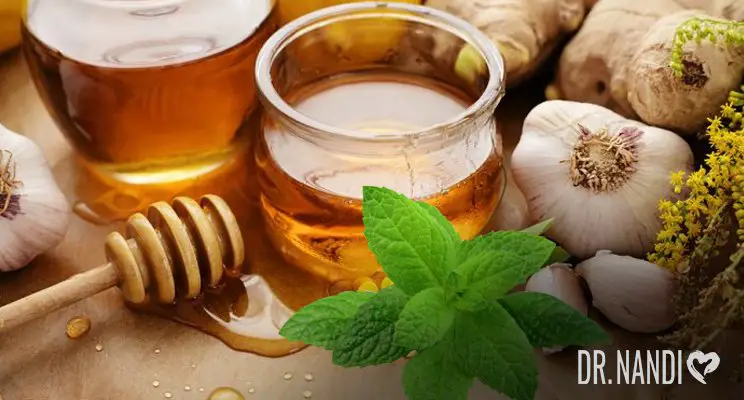
When it comes to taste, manuka honey is definitely the most attractive natural antibiotic source. It has been known to kill off many deadly pathogens, such as MRSA and other dangerous bacteria.
Manuka honey also doesn’t give bacteria any reason to develop antibiotic resistance, which makes this an even greater natural antibiotic choice. Studies have been proving its potent remedying ability for years (5).

My Personal RX on Keeping Your Immune System Battle-Ready
I hear this a lot in my practice: “Doc, I don’t have time to overhaul my whole life.” And the good news is — you don’t have to. Immune resilience isn’t built through some perfect wellness routine; it’s built through a handful of small, repeatable habits that fit into the life you’re already living.
So instead of a list of things you “should” do, here’s what I actually tell my patients to try — small enough to stick, real enough to matter.
1. Add one fermented food to your day, not a whole diet overhaul: A spoonful of sauerkraut on your sandwich, a splash of kefir in your smoothie, or a side of kimchi with dinner — pick one and make it a habit. Your gut bacteria don’t need perfection, just consistency.
2. If you’re using something like oregano oil or garlic to fight something off, give your gut backup too. These are powerful, but they don’t discriminate between good and bad bacteria. I tell patients to keep something like Digestive Enzymes on hand for exactly these moments — they support your body’s natural digestive process and help ease any bloating or discomfort while your gut recalibrates.
3. Set one non-negotiable bedtime alarm — not a wake-up alarm, a wind-down one. Thirty minutes before you want to be asleep, put the phone down. That’s it. Sleep is when your immune system does its repair work, and this one change does more than almost anything else on this list.
4. Step outside for 10 minutes before noon. You don’t need a beach vacation — a coffee on the porch or a walk to your car with your face toward the sun counts. If your winters are gray or you’re indoors most days, a Vitamin D3 + K2 supplement is a low-effort way to cover the gap.
5. Keep a bag of frozen berries in the freezer. Frozen is just as nutritious as fresh, doesn’t spoil, and takes zero prep. Toss a handful on yogurt or in a smoothie — that’s your antioxidant boost for the day, done.
6. Take a 10-minute walk after one meal a day. You don’t need a gym membership or an hour on a treadmill. A short walk after dinner moves immune cells through your body and helps with digestion at the same time.
7. Pick one “reset” moment for stress — and attach it to something you already do. Three slow breaths while the coffee brews, or while you wait for a red light. Small, repeated moments of calm add up more than one big meditation session you’ll skip when you’re busy.
8. Swap your afternoon soda or sweet coffee for something plain three days a week. Not forever, not every day — just enough to give your immune system a break from the sugar dip that follows.
9. Keep a water bottle somewhere you’ll actually see it. On your desk, in your car cupholder, wherever you’ll notice it without thinking. Hydration habits fail because the bottle’s out of sight, not because people don’t care.
10. Give it 2-3 days, then call me (or your doctor). Natural antibiotics are great first responders for minor stuff, but if a fever climbs, redness spreads, or you’re not turning a corner in a couple of days, that’s your sign to stop self-treating. Knowing that line is what makes using natural remedies safe in the first place.
None of this requires becoming a different person — just borrowing a few minutes from a day you’re already living.

Sources:
- http://pubs.acs.org/subscribe/archive/mdd/v05/i04/html/04news4.html
- https://www.scientificamerican.com/article/silver-makes-antibiotics-thousands-of-times-more-effective/
- https://www.sciencedaily.com/releases/2001/10/011011065609.htm
- https://www.umm.edu/health/medical/altmed/herb/echinacea
- https://www.ncbi.nlm.nih.gov/pmc/articles/PMC3609166/